Sales and margin by channel on one page, and a customer base that belongs to you, so you stop paying for ads to find the same people twice.
Back to AI Web Development
Retail & brands · 02 / 14
Online store on your own domain
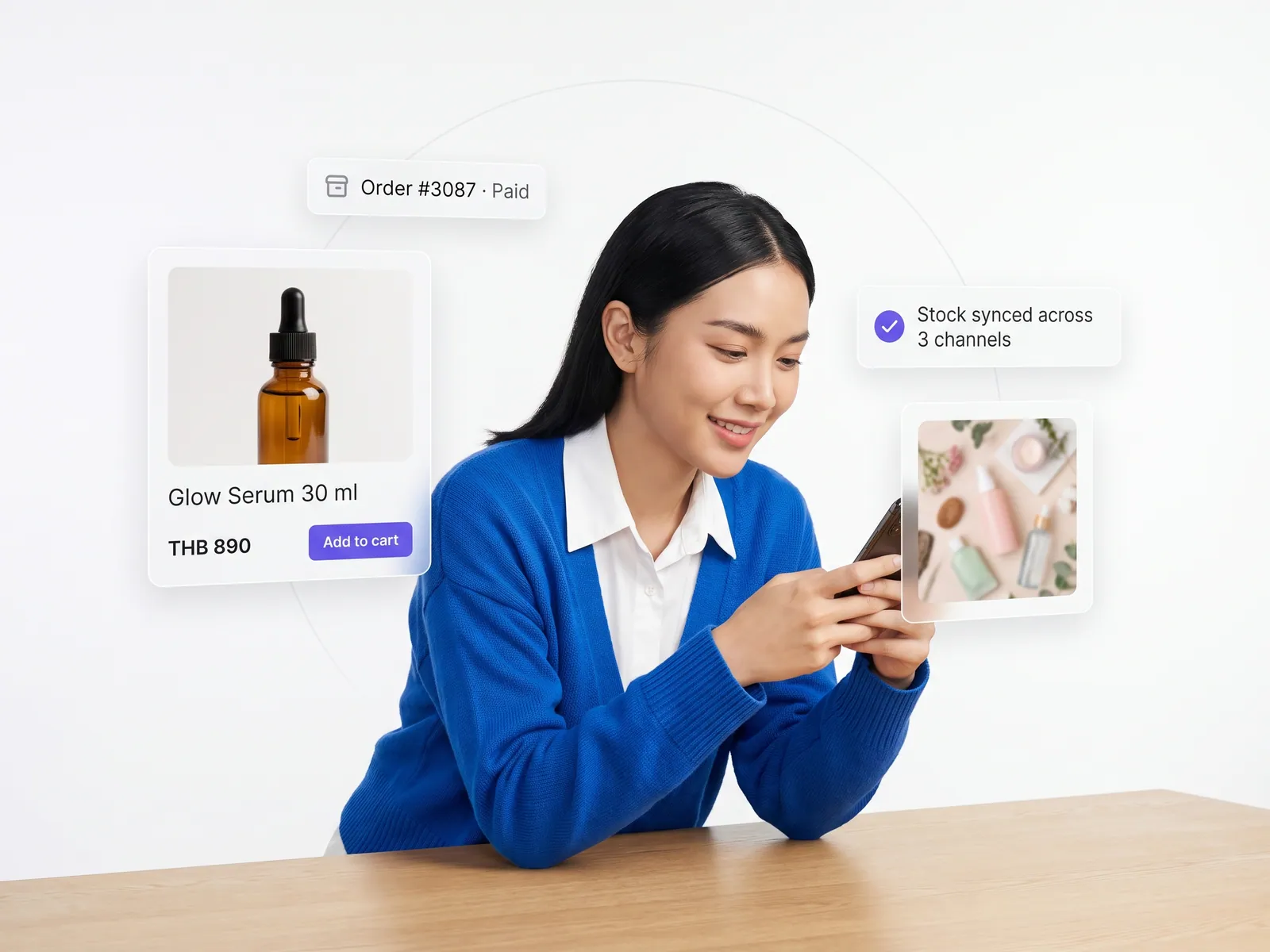
A store on your own domain with payment and shipping built in, stock in step with Shopee and Lazada, and customer data that stays with you.
 Retail & brands
“Marketplace sales are fine, but the fees rise every year and we never learn who the customer is. We can’t even send an offer to someone who bought before, and we can’t run our own promotions.”
The problem
Brands that grew up on marketplaces hit the same ceiling. Platform fees and in-platform ad costs rise every year, margin per item thins while sales stay flat, and the one thing the platform never hands over is the buyer’s name and phone number. So the brand pays for ads again to find the same customer.
Many brands have tried opening their own site and given up: stock drifted out of step with the marketplaces, orders had to be re-keyed into the courier system, and nobody looked after the site once it was live. The store on their own domain became a shop with nobody behind the counter.
How we solve it
We build a store on your domain that works alongside the marketplaces you sell on. Stock is one pool; a sale anywhere deducts from it everywhere. Web orders go to the courier with the label printed and the tracking number filled in, and sales and fees post to your accounting system every day. Your team sees every channel on one page.
Customers who buy on the site become your members. The system records who bought what and when, then drafts a promotion to the right group, say everyone who bought sunscreen two months ago. Marketing picks the group, checks the message and sends it on LINE or email. On the site, customers search in plain words, see what is usually bought together, and ask the AI chat about a parcel or a return at any hour.
Money and returns always pass through a person. The system drafts the refund; your staff approve it. Any discount the system proposes stays inside a ceiling marketing sets. After launch we go through the numbers with you each month: which product pages rank, which channel pays, which products to push on the site.
How it runs
Work comes in from
- Orders from the site
- Shopee, Lazada and TikTok Shop
- Stock in the warehouse
- Customers asking in AI chat
What the AI does
- Deduct one stock pool across every channel
- Push orders to couriers and accounting
- Search and recommend products
- Draft messages to past customers
Where it lands
- Couriers with tracking numbers
- Accounting system
- LINE and email to members
- Dashboard of sales by channel
Try it
A sample online store, seen by the three people who use it every day
Pick the kind of shop closest to yours, then buy as a shopper, handle orders as the back-office team and read sales as the brand owner. Every screen is a sample we redesign around your brand.
Kind of shop
Sample data
Shoppers buy in your store without having to message you first
Someone who arrives from Google or a brand post needs to find the product quickly, see that it is really in stock and pay the way they like. After paying, all they want to know is when it will arrive.
- Search in the shopper’s own words, with the products people usually buy together
- Stock on the site is the same count as on the marketplaces, so nobody buys what has already sold out
- Member coupon, delivery fee and payment method in the cart, paid through a payment gateway
- The tracking number goes to LINE, and AI Chat answers delivery and return questions at any hour

Sample data
The back-office team sees orders from every channel in one list
Orders from the website, Shopee, Lazada and TikTok Shop come into one place, and a sale anywhere takes from the same stock. The team stops keying orders twice and stops chasing oversold items.
- Orders from every channel in one list, marked to pack, packed and shipped
- Stock on every channel changes together; when the last one sells, every channel shows sold out
- Shipping labels printed for many orders at once, with the tracking number sent to the shopper
- Refund requests arrive with the details prepared, but money goes out only when a person approves

Sample data
The owner sees which channel sells and who the returning customers are
Sales from every channel sit on one page. People who buy on your site become your members, so you can send an offer to those likely to buy again without paying for ads to reach the same people.
- Daily sales and orders, split by website, Shopee, Lazada and TikTok Shop
- Best sellers, new members and customers who came back to buy again
- AI drafts an offer for past buyers, with a discount no higher than the cap the team sets
- The message goes out only after the owner or the marketing team approves it

Before and after
Before
After
Marketplace fees rise every year and margin per item thins
Sales on your own domain carry no platform fee
No idea who the customer is, no way to send a past buyer an offer
Past customers are members you message on LINE yourself
Site stock and Shopee stock drift apart, items oversold
One stock pool, deducted on every channel at once
What you get
- 01
A store that loads fast on a phone, takes cards, PromptPay, mobile banking and instalments, and ships through the couriers you already use with tracking numbers filled in automatically
- 02
One stock pool synced with Shopee, Lazada and TikTok Shop, so a sale on any channel deducts the same stock and nothing is oversold
- 03
Membership, coupons, and LINE or email messages to past customers based on what they bought
- 04
Search in plain words, suggestions for items usually bought together, and AI chat that answers about parcel status and returns
- 05
Product pages that rank for the product name on their own, and sales flowing into your accounting system without re-keying
Every feature
36 online store features to choose from, for what your shop actually needs
You do not need all of them. Many shops start with the store, payments and stock in step with the marketplaces, and add membership, offers to past buyers and AI when they are ready. Each one is built around how your shop works.
Storefront & checkout
- A store that loads fast on a phone
Designed for the phone first, with product photos sized to open quickly
- Options, sizes and bundles
Each option carries its own stock and price
- Search in plain wordsAI
Type “sunscreen for oily skin” and find the right products without knowing their names
- Items usually bought togetherAI
AI reads the shop’s own orders and suggests them on the product page and in the cart
- Checkout without an account
New customers pay straight away and are invited to join after the order
- Thai and English
Buyers from abroad shop on their own; order emails follow their language
Payments & accounts
- Cards, PromptPay and mobile banking
Through the payment gateway the shop signs up with; the money goes to the shop’s account
- Instalments
The shop chooses which products qualify, and from what amount
- Refunds need a person to approve
The system drafts the refund; no money moves until your staff confirm
- Electronic receipts and tax invoices
Sent by email or LINE after payment; customers request a tax invoice themselves
- Sales and fees into your accounts
Posted to PEAK or the system you use, every day, with no re-keying
- Payouts checked against orders
What the gateway and the marketplaces pay in is matched to the orders each cycle
Stock & marketplaces
- One stock pool for every channel
A sale on the site, Shopee, Lazada or TikTok Shop deducts from the same place
- Nothing oversold
When the last one sells on one channel, the others stop selling it
- Stock held back per channel
Keep some for the site during a campaign so a marketplace does not sell out first
- Products and prices edited in one place
Names, photos and prices go to every channel; a price change waits for a person to confirm
- Reorder alertsAI
AI reads past sales on every channel and says when to order more
- Product description draftsAI
AI drafts from the product details; your team checks and edits before it goes live
Shipping & after-sales
- Orders sent to your courier
Flash Express or whichever courier you already have an account with, no re-keying
- Labels with tracking numbers
Printed in batches; the tracking number reaches the customer by itself
- Packing screen
Today’s orders to pack, with barcode scans to catch the wrong item
- Parcel updates on LINE or email
Each time the courier’s status changes, so customers do not have to ask
- AI chat for parcels and returnsAI
Answers from the tracking number and the shop’s policy, and hands over to your team when unsure
- Return requests on the site
Pick the order, add a reason and photos; your team sees every request on one screen
Members & marketing
- Your own membership and points
People who buy on the site become your members, with their orders and points in one place
- Coupons and discount codes
With expiry dates, usage limits and the products they apply to
- A discount ceiling set by marketing
No discount the system proposes goes above it; anything larger needs a person to approve
- Offer drafts for the right groupAI
Say everyone who bought sunscreen two months ago; your team checks before it goes out on LINE or email
- Refill reminders
For products used up on a cycle, such as serum or supplements: when it is due, a message invites a reorder
- Abandoned-cart reminders
Left in the cart and not paid: a reminder goes out at the time the shop sets
Reports, SEO & security
- Sales and margin by channel on one page
Split by channel, product and period
- Product pages that rank for the product name
Name, details and price as text Google can read, with structured data
- Google Analytics connected
See where visitors come from and which pages turn into orders
- Weekly summary to LINEAI
The key numbers, with notes written by AI, readable in a minute
- Role-based access
Packing, marketing, accounts and the owner each see what they need
- PDPA with an access log
Consent recorded, deletion on request, and a log of who opened a customer record
The life of one order
From the first search to the next order
Every order passes through three hands: the shopper, the system and your team. This shows who does each step, and where a person decides.
ShopperSystemYour team A person decides
- 1 Find a product Shopper
Search in plain words, or arrive from Google or LINE
- 2 Add to cart Shopper
With items usually bought together, and the stock actually on hand
- 3 Pay Shopper
Card, PromptPay, mobile banking or instalments; the receipt comes at once
- 4 Stock cut everywhere System
The count on Shopee, Lazada and TikTok Shop drops with it
- 5 Label and tracking System
The order goes to your courier; the shopper gets the tracking number
- 6 Pack Your team
Pick from the list, scan to catch mistakes, hand to the courier
- 7 Delivered and rated Shopper
Parcel updates on LINE until it arrives, then a rating
- 8 The next order Your team
The system drafts an offer to members; marketing checks and sends it
When things do not go to plan
A customer returns an item
- Customer sends a request with photos
- System checks the return policy and drafts the refund
- Your team approves, then the money goes back A person decides
An item sells out mid-checkout
- The last one sells on Shopee first
- Site tells the shopper before payment and offers similar items
- Shopper picks another item or asks to be told when it is back
A parcel is late or lost
- System flags a parcel that has stopped moving
- Your team contacts the courier and tells the customer
- Your team decides: send again or refund A person decides
How it fits together
Sales channels, the core and the systems you already use
Whether a customer buys on your site or a marketplace, every order lands in one core with one stock pool, then flows on to the couriers, payments and accounting you already use. You keep selling on the marketplaces as before.
Where people use it
- Store on your own domainOn phone and desktop
- Your LINE OAChat, parcel updates and member offers
- Shopee, Lazada and TikTok Shop storefrontsSelling as before
- Back-office screensPacking, returns and reports
The shop’s core
- Products and one stock poolEvery sales channel
- Orders from every channel
- Payments and refunds
- Members and coupons
- Customer messages
- Reports and the weekly summary
- AI assistant for search, chat and draftsAI
Systems you already use
- Shopee
- Lazada
- TikTok Shop
- Omise and PromptPay
- Flash Express or your courier
- PEAK or your accounting system
- LINE Messaging API
- Google Analytics
Who gets what
Shopee, Lazada and the couriers connect through official APIs. Payment runs through a certified provider, so card data never touches your server. Member data is stored under PDPA with a consent page.
The back office stops re-keying orders into couriers and accounting. Marketing sends offers to the people likely to buy without asking anyone for a file.
Who this fits
Cosmetics & skincare brandsFashion & accessoriesSupplements & healthHome goods & furnitureMother & baby productsWholesalers starting to sell retail
Connects with what you already run
ShopeeLazadaTikTok ShopOmiseFlash ExpressPEAKLINE OA
Development process
- 1
Discover
Requirements, users and success metrics, with scope and price fixed before we start.
- 2
Design
UX and system architecture; the prototype is approved before anything is built.
- 3
Build
AI-accelerated sprints with a demo every week, reviewed by senior engineers.
- 4
Test
QA, security and performance verified against the agreed scope.
- 5
Launch & care
Production deploy, team training, and a monthly care plan.
Read a sample proposal before we talk
Our sample proposals are open to read with no form to fill in. They show how offers to past customers and AI customer support, two parts of an online store like this, split into modules and are delivered in phases.
Questions before building an e-commerce website
We already sell on Shopee and Lazada. Do we need our own store as well?
You do not have to choose. The store on your own domain works alongside the marketplaces you sell on: one stock pool, and orders from every channel in one back office. What it adds is sales with no platform fee, and a customer list that is yours, so you can send offers to past buyers without paying for ads to find them again. If you would rather sort out the marketplace back office first, see Marketplace back-office workflow.
We already have a Shopify or WooCommerce store. Do we have to move?
Not always. We look at your current store first and find where it falls short. If it works well and only lacks stock sync with the marketplaces or your accounting system, adding to what you have is sometimes the better choice, and we tell you before quoting. If you decide to move, products, customer lists and order history come across from files the old system exports, and old product links forward to the new pages, so customers and Google following them still land in the right place.
Does stock really stay in step on every channel? What if two people buy the last one?
Stock is one pool. A sale on any channel deducts from the same place, and the new count goes out to every channel through each platform’s official API. For a campaign that sells fast, the shop can hold stock back per channel, keeping some for the site, for example. If the last one sells elsewhere while someone is paying on your site, the site tells them before any money is taken, then offers similar items or a message when it is back.
Which payments can we take, and how do refunds work?
Cards, PromptPay, mobile banking and instalments, all through a payment gateway the shop signs up with, such as Omise. The money goes to the shop’s account, and no card numbers pass through our system. When a customer asks for a refund, the system checks the shop’s policy and drafts the amount, and no money moves until your staff approve. Any discount the system proposes stays under a ceiling marketing sets.
Can we keep our courier? Do we still write labels by hand?
Yes, you keep it. Orders go to the courier you use, Flash Express for example, through that courier’s API. Labels with tracking numbers print in batches, and the tracking number reaches the customer on LINE or email by itself. If you use more than one courier, the shop sets which orders go with which. If your courier has no API, we look at other routes and check this before quoting.
Who owns the customer data, and how is PDPA handled?
The data of customers who buy on your site belongs to the shop from day one, stored in the shop’s cloud or wherever the shop decides. The system records consent at sign-up, with consent to marketing messages kept separate, and customers can ask to see or delete their own data. Each role sees only what it needs, and there is a log of who opened a customer record and when.
What do the price and timeline depend on?
On the number of products and options, how many marketplaces need stock sync, the payment methods and couriers to connect, membership and coupons, and the accounting system you use, plus moving data if you have an existing store. We fix the scope and price before work starts, and the dates of each phase are in the quotation. For a rough figure first, tell Dream, our AI assistant, about the project and get an estimate in a few minutes.
If you sell wholesale to dealers who need their own price list and quotes, see B2B catalogue and quote requests. For a restaurant taking takeaway orders and table bookings, see Restaurant site with ordering and table booking, and if you only need a page for one campaign, see Campaign & landing pages.
Read moreYour own online store or Shopee and Lazada?What an e-commerce website needs: a 12-part checklistOrder and status tracking agentLoyalty and membership appAI search visibility (GEO & AEO)

Turn your business problem into a system that works for you
Tell us today — get an executive-ready proposal with the plan and budget.
Talk to an engineer about thisMore solutions in AI Web Development
See the whole service Companies & factories Multilingual corporate website Hotels & resorts Booking engine on the hotel’s own site Service firms & B2B Customer portal Marketing teams & agencies Campaign & landing pages Operations & IT Internal web app Factories, wholesalers & multi-branch businesses Custom ERP and CRM Owners & marketing teams AI search visibility (GEO & AEO) Clinics & aesthetics Clinic website with online booking Schools & universities Admissions site and student portal Real estate Project site with viewing appointments Restaurants & cafés Restaurant site with ordering and table booking Factories & wholesalers B2B catalogue and quote requests Tutoring schools & trainers Online course website