Know which customers actually make the shop’s revenue, how often they buy and how many people each promotion brought back, on one page.
Back to AI App Development
Shops with regulars · 02 / 13
Loyalty and membership app
A membership app that knows who the regulars are, adds points by itself at checkout and sends each customer an offer based on what they actually buy.
 Shops with regulars
 “Half the paper stamp cards get lost, nobody knows who the regulars are, and every promotion goes to everyone the same way.”
The problem
Most shops know the regulars matter. What they have is a paper stamp card and a notebook of phone numbers by the till. The cashier recognises a few faces; the other branches recognise none. When a promotion goes out, it is one broadcast to everyone on the LINE OA, so the person who bought yesterday gets a discount on the same item, and the regular who has been away for months is never noticed.
The data that should be the shop’s own asset, who buys what, how often and at which branch, never lives anywhere you can open, and every promotion decision is a guess.
How we solve it
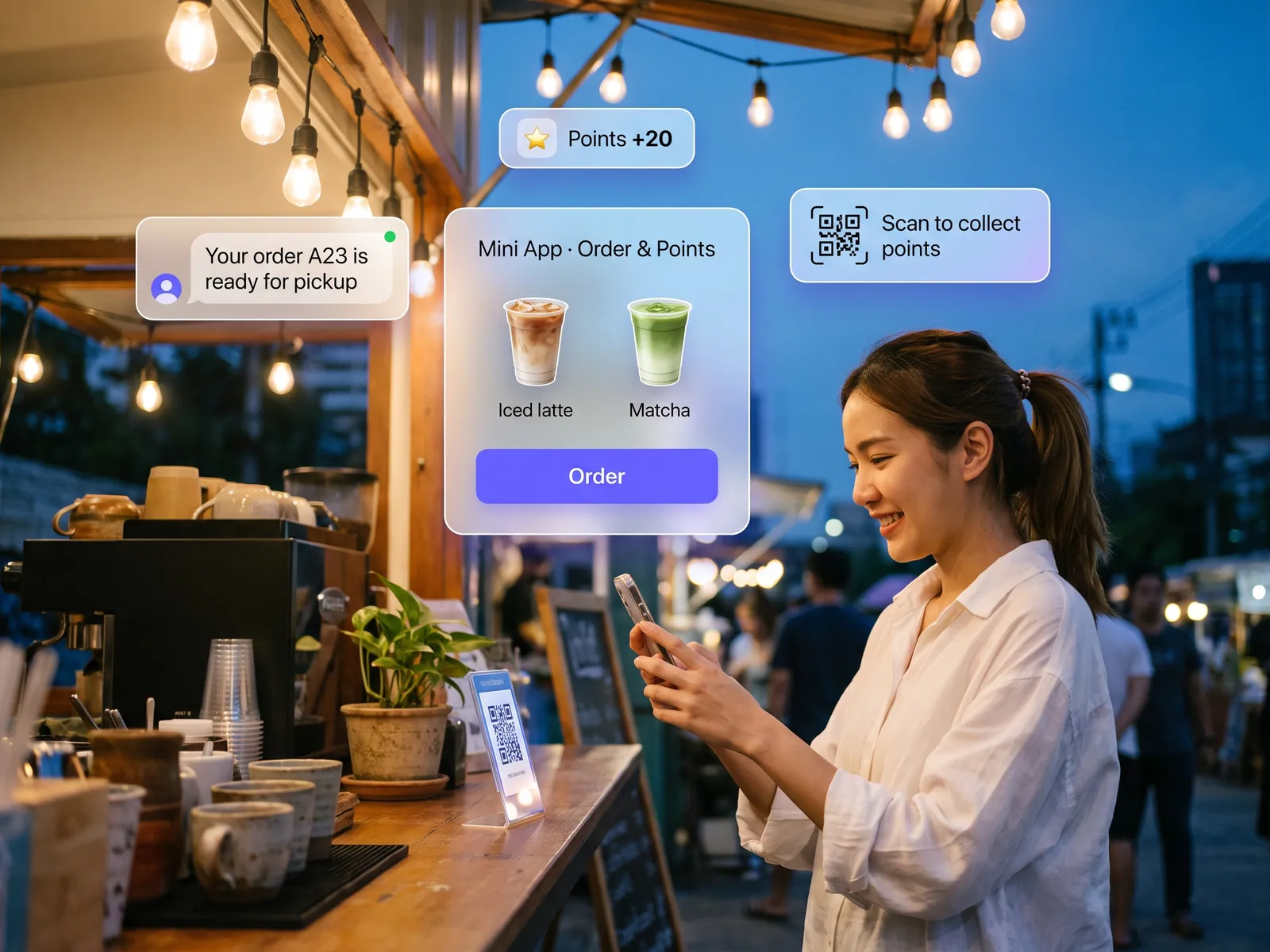
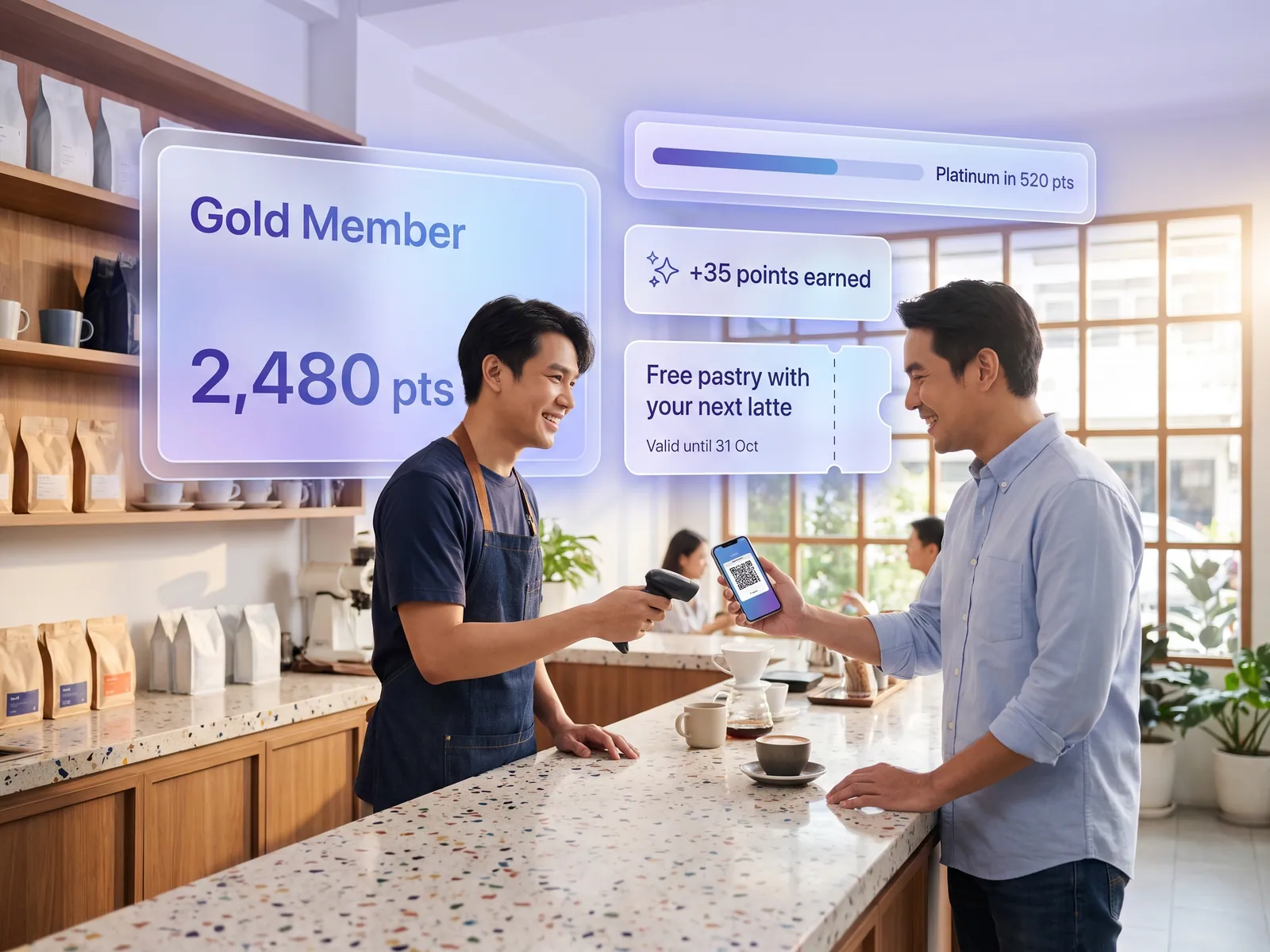
We build a membership app that takes as little effort to join as saying a phone number. The customer shows a QR code for the cashier to scan, or the system matches the number tied to the payment, and the points land immediately. There is no card to lose, and it works the same at every branch and in the online shop because it connects to the POS you already use.
The back office groups customers from real purchase history, and the system drafts a message and an offer for each group: a discount on a repeat item for regulars who have gone quiet, or an early-access perk for the most frequent buyers. The marketing team reads, edits and sends by push or LINE OA, then sees who came back and bought after the message.
The rules for points and rewards stay yours. The system calculates to the rules you set, and high-value redemptions or backdated point adjustments need a member of staff to confirm. If the same code is scanned repeatedly within a short window, the system holds that transaction and alerts the branch manager first.
How it runs
Work comes in from
- Payment at the POS
- Online orders
- Sign-up by LINE or phone number
What the AI does
- Match the payment to a member
- Add points to the shop’s rules
- Group customers by purchase history
- Draft an offer for each group
Where it lands
- The customer’s membership app
- Push and LINE OA
- Dashboard for the owner
- Marketing team presses send
Before and after
Before
After
Half the stamp cards get lost, and customers stop collecting
Points land on every payment, at every branch and online
One promotion goes to everyone, including the person who bought yesterday
Each group gets an offer that matches what they actually buy
Nobody knows which regular has stopped coming
Regulars who have gone quiet appear on the dashboard with a drafted offer
What you get
- 01
A membership app that signs up with a phone number or LINE account and shows a QR code at the till, so points land the moment the customer pays, with no card to carry
- 02
Tiers, reward redemption and coupons that work in store and online, one scheme across every branch
- 03
Customer groups built from real purchase history, such as regulars who have gone quiet or people who keep buying one category, with a draft offer for each group
- 04
Offers sent by push or LINE OA per group, with a count of who came back and bought after receiving one
- 05
A dashboard for the owner: new members, visit frequency and the unredeemed points still sitting on the books
Who gets what
Connected to the POS through its API or a read-only link to the sales database, with no POS replacement. Member personal data is stored separately and encrypted, with PDPA consent collected at sign-up.
Cashiers stop searching the notebook for a number and stamping cards; one scan does it. Marketing gets the list and the message already drafted, and only decides what to send.
Who this fits
Multi-branch cafés & restaurantsBeauty salons & spasSupermarkets & convenience storesPetrol stations & car careFashion & cosmetics brands
Connects with what you already run
Existing POSLINE OAShopeeLazadaOmiseAccounting system
Development process
- 1
Discover
Requirements, users and success metrics, with scope and price fixed before we start.
- 2
Design
UX and system architecture; the prototype is approved before anything is built.
- 3
Build
AI-accelerated sprints with a demo every week, reviewed by senior engineers.
- 4
Test
QA, security and performance verified against the agreed scope.
- 5
Launch & care
Production deploy, team training, and a monthly care plan.

Turn your business problem into a system that works for you
Tell us today — get an executive-ready proposal with the plan and budget.
Talk to an engineer about thisMore solutions in AI App Development
See the whole service Brands & retailers Customer app Appointment businesses Booking and queue app Field crews & couriers Field service and delivery app Management & HR Internal operations app Brands with a LINE OA LINE Mini App (LIFF) Businesses that must know their customer e-KYC and digital ID verification Schools & institutes School management system Tutoring schools & exam bodies Online testing platform Restaurants & cafés Restaurant POS and ordering Hotels & resorts Guest app and hotel booking Condo & estate management Resident app for juristic persons Clinics & hospitals Patient app and appointments