
Development Quality
Production-grade engineering standards
A good system is more than a pretty screen and working features. Architecture, security, deployment, backup, monitoring and scaling decide whether it runs safely, stays stable and grows with your business. We design for real production from day one — not just a working demo.
Systems that look the same can differ wildly in quality
Two systems can share the same look and feature list — what users never see is the engineering behind them.


Makes features work
Designed for long-term real use
Basic server deploy
Infrastructure and a scaling plan
Basic or no backup
Backup and restore strategy
Tested by the developer
QA, automated tests, stress tests
Security checked later
Security by design
Manual deploys
CI/CD pipeline
No monitoring
Monitoring, logs and alerts
Scales when it breaks
Capacity planned ahead
No architecture docs
Architecture and infra documentation
Fixed after it crashes
Recovery and disaster plan
The standards inside every project we ship
Click a topic to jump to its details.

Structure designed before code is written
Security by Design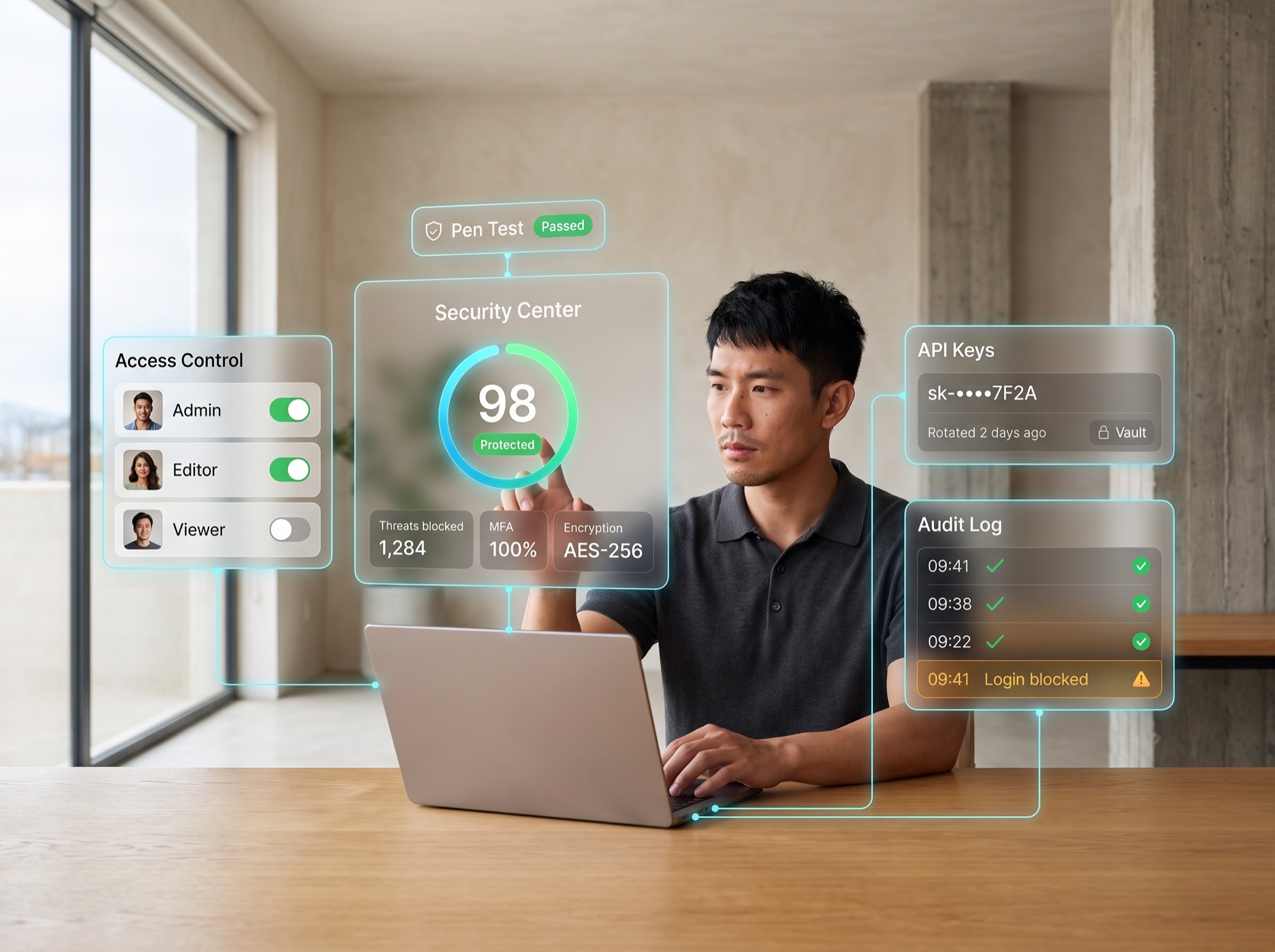
Secure from the design stage, not audited later
CI/CD & Environments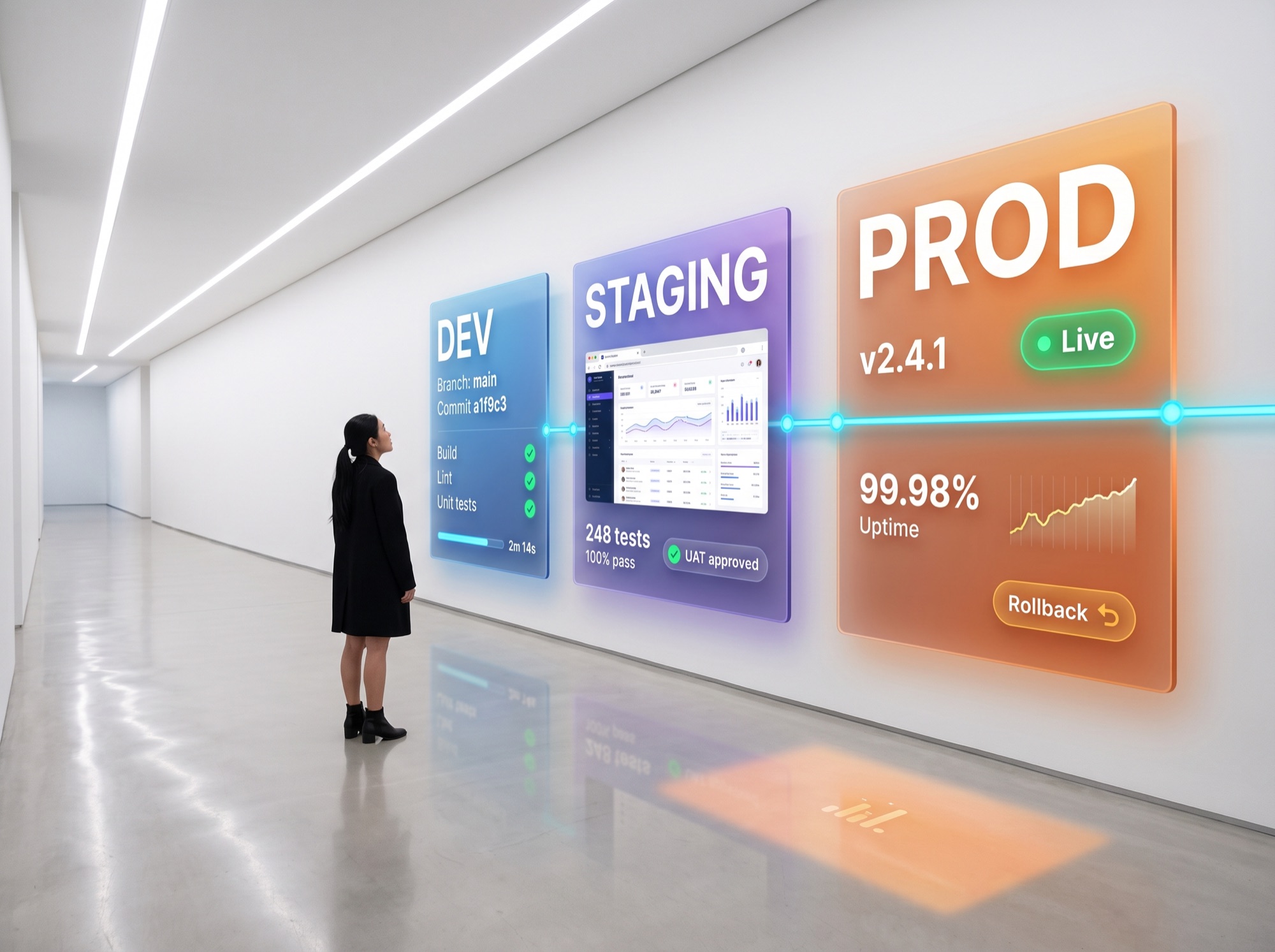
Automated deploys through three environments
Load & Stress Test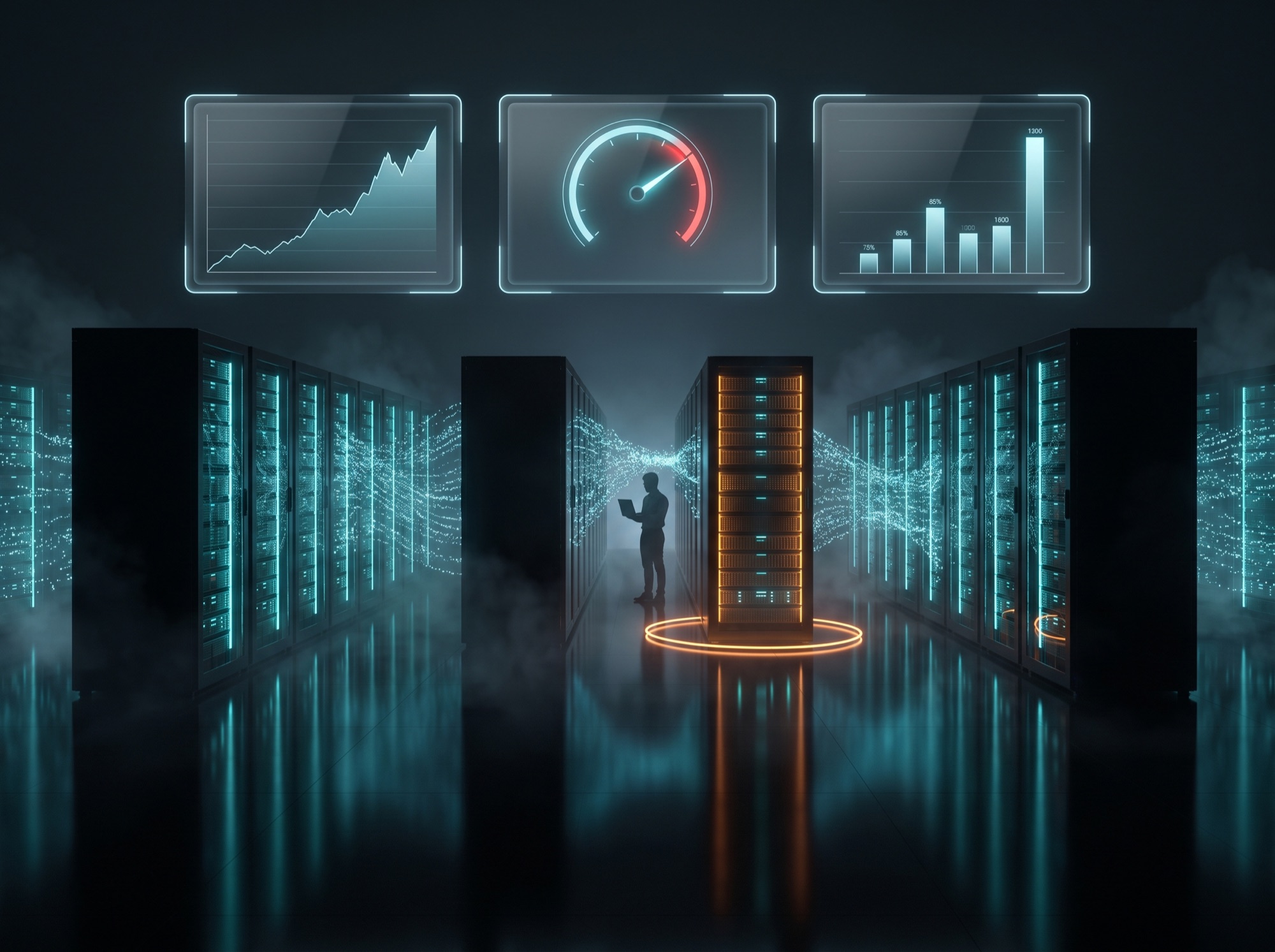
Know your capacity before users find it
Scalable Infrastructure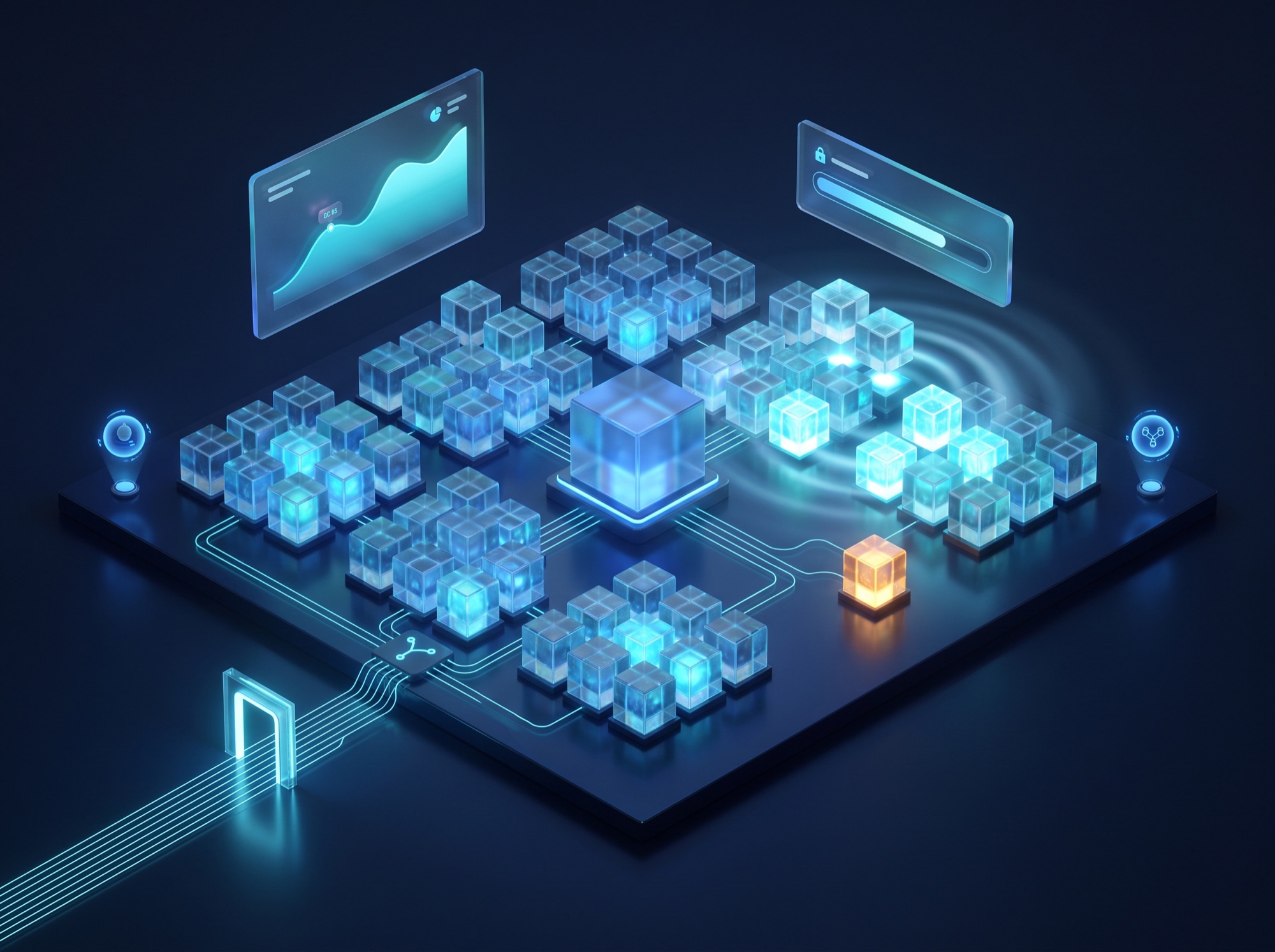
Grows with the business — Kubernetes included
Monitoring, Backup & Recovery
Don’t let customers be your alerting system
Maintainable & Ownable
Extensible long-term — and truly yours
AI Engineering
Extra standards that AI systems demand
01 — System Architecture. Real systems deserve a clear architecture before development starts. We design frontend, backend, API, database, cache, storage, AI services and cloud infrastructure — with a diagram the whole team shares.
Frontend to network and cloud, nothing left implicit.
How each part works together — visible before building.
Design first means fewer rework cycles and easier scaling.
Any team can take over, because the system is understood the same way.
02 — Security by Design. Security is considered at design time — authentication, role-based access control, API security, encryption, secret management, input validation and rate limiting — reducing risk before production.
Authentication, authorization and RBAC at every layer.
Data protected in transit and at rest, secrets managed.
Prepared for VA/pentest; findings fixed before go-live.
Code, package and secret scanning against supply-chain risk.
03 — CI/CD & Environments. Build → automated test → security check → staging → approval → production. Every deploy runs the same pipeline, with development, staging and production strictly separated — never testing on the live system.
Consistent deploys, less human error, versions always traceable.
Run before every release — broken code never reaches users.
QA and UAT on an environment that mirrors production.
Any problem, previous version restored in minutes.
04 — Load & Stress Test. Before launching anything expecting high traffic, we test concurrent users, requests per second, API and database performance — finding bottlenecks before your users do.
05 — Scalable Infrastructure. Load balancing, cache, CDN, database scaling, queues and containers designed to expand when needed — and Kubernetes where high availability truly matters. Not every system starts big; every system should be able to scale.
06 — Monitoring, Backup & Recovery. Production systems must see themselves at all times. We monitor from server health and error rates to AI usage, keep backups that actually restore, and hold a disaster-recovery plan covering server failure through cloud outages.
07 — Maintainable & Ownable. A good system can be developed further without depending on us. Code standards, documentation, API docs, deployment guides and source code are delivered per scope, so you fully control your own system.
08 — AI Engineering. AI systems carry risks ordinary software doesn’t. We put governance, guardrails, evaluation, cost control and fallbacks in place so AI can only act within the boundaries your business rules define.
Data-access permissions, prompt-injection defence, usage logs.
Refunds, payments, deletions — always through a person first.
Test cases for accuracy, hallucination and edge cases before launch.
Token limits, caching, model routing, and a fallback chain.
Five principles of production-grade engineering
Safe from the design stage — security, permissions, API protection and testing considered from the start.
Built to keep running — monitoring, logging, backup and recovery limit the impact of failures.
Ready to grow — infrastructure, database, cache and scaling sized to actual use.
Extensible for years — architecture, docs, CI/CD and code standards cut technical debt.
Under your control — source code, documentation and architecture delivered per scope.
Our engineering process
Not every project needs everything
We don’t believe every system needs Kubernetes, microservices or complex infrastructure. A small company website may not need Kubernetes — but systems with many users, critical transactions, customer data, payments or AI agents deserve a higher standard.
Choose engineering to fit the business requirement, risk, budget and real user count.
Why it matters
A cheap system and a production-grade system can share the same feature list. None of this shows in a screenshot or a demo — but it hits the business directly once real users arrive.
Security, stability, the ability to scale, and the ability to maintain the system — that’s the difference.

Building a system your business will really run on?
Tell us your requirements, user count and workflow — we design from application architecture, security and infrastructure through AI integration to production deployment.
Discuss your architecture & project