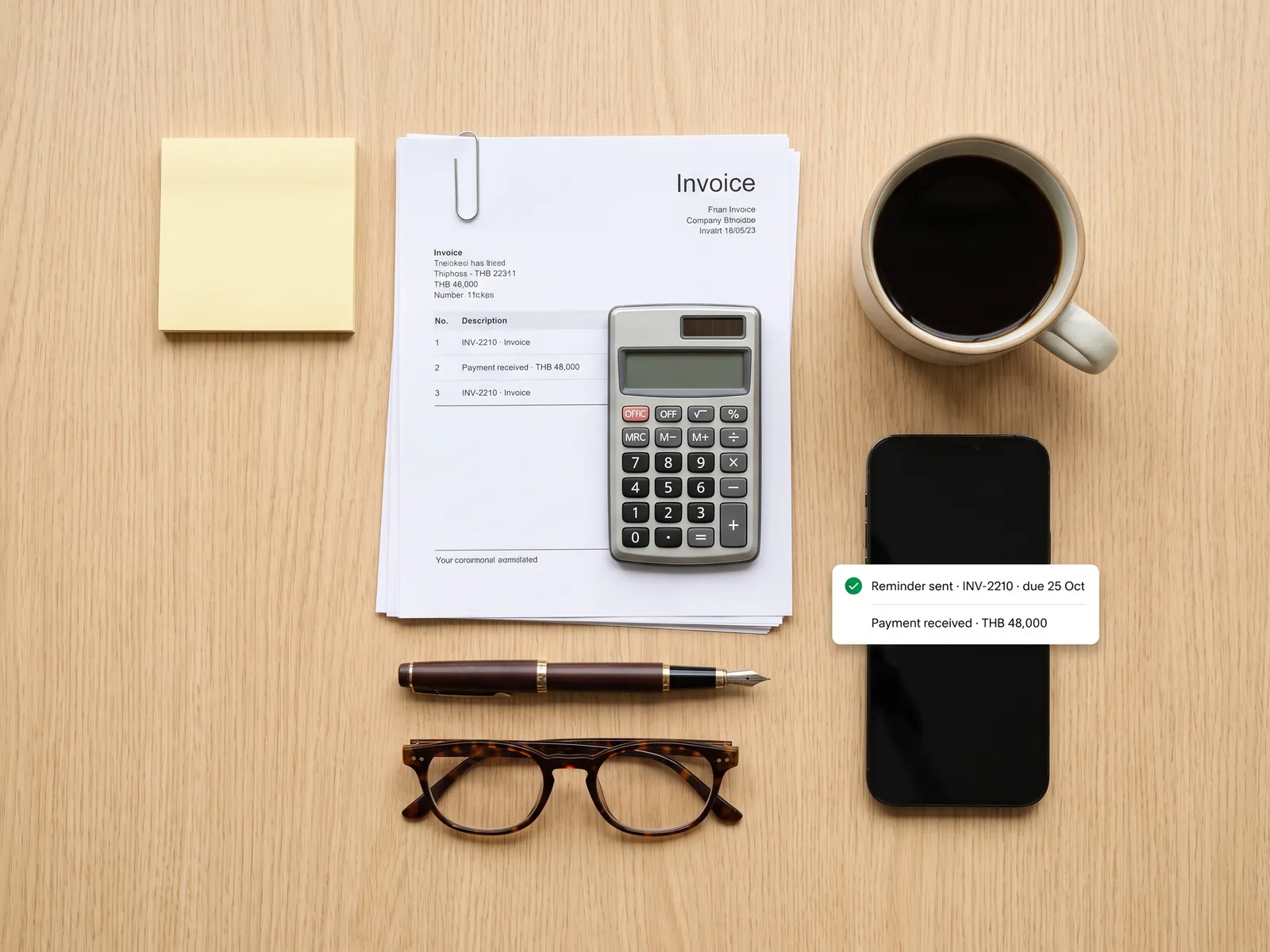
The same admins handle growing sales, and “where is my order” all but disappears from the chat.
Back to AI Agent & Chatbot
Online shops & wholesalers · 04 / 12
Order and status tracking agent
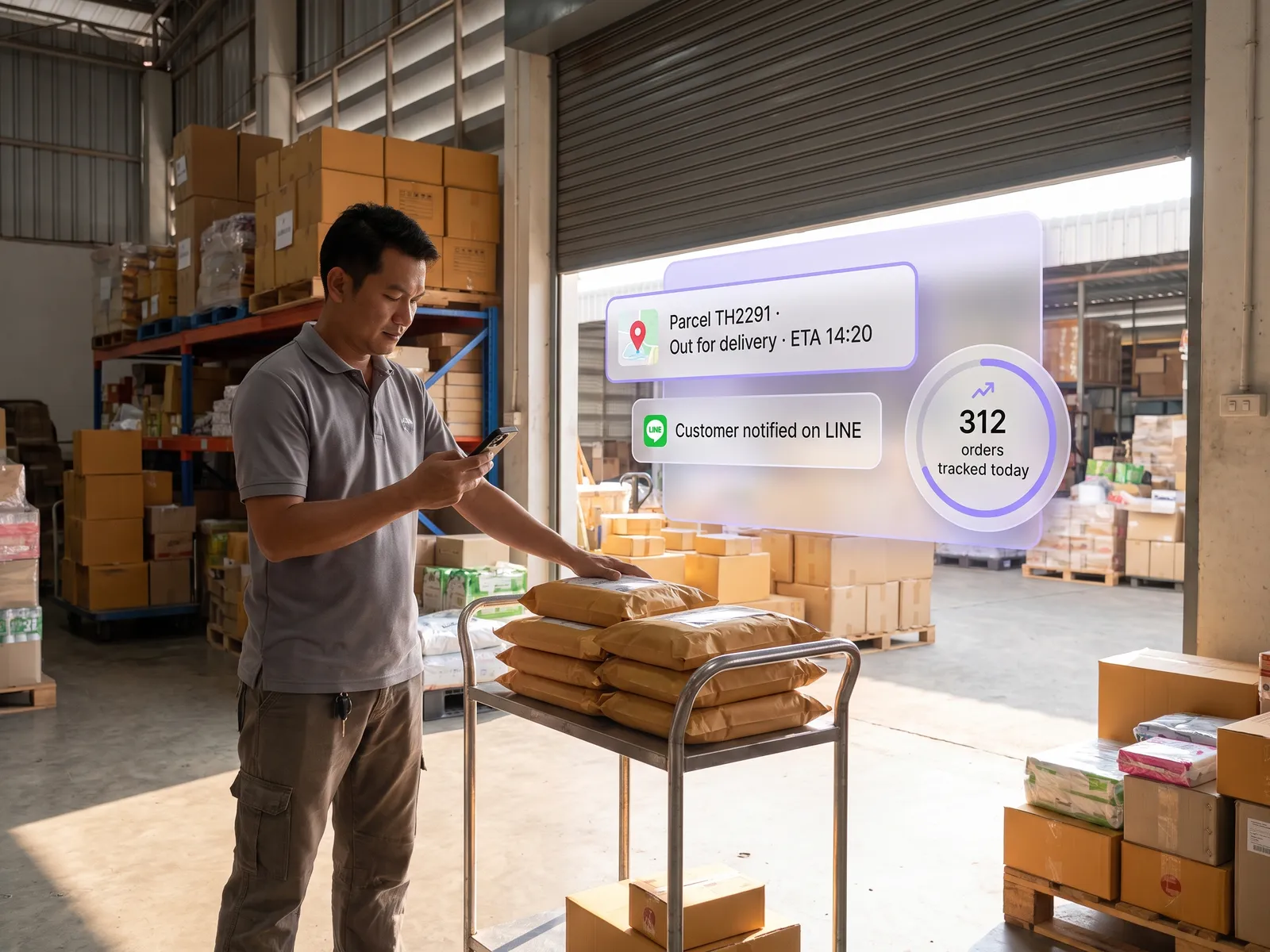
“Where is my order?” answered with the tracking number in seconds, and customers told automatically every time the status changes.
 Online shops & wholesalers
 “Half the incoming messages are ‘where is my order?’. The team opens the courier system, checks each one and types the reply.”
The problem
After a live sale or a campaign, half the messages ask the same thing. Has it shipped, what is the tracking number, when will it arrive. The admin opens the order screen, searches the name, copies the tracking number, pastes it into the courier’s site and types the reply, one customer at a time. Two or three minutes each, times several hundred messages a day.
Customers who want to order more wait in the same queue. And a parcel returned to sender or stuck at a hub goes unnoticed until the customer calls to complain.
How we solve it
We connect the agent to your order system and the APIs of the couriers you use. When a customer asks on LINE OA or Messenger, it finds the order from the phone number or the name used at checkout and replies with the latest status, the tracking number and the courier link in one message. If the customer has several orders, it asks which one they mean.
The bigger change is that customers hardly need to ask. The agent messages them when the parcel leaves the warehouse and again when it is out for delivery. A parcel that is late or returned gets flagged to the team and the customer first, with a choice to reship or wait.
Cancelling a paid order and refunding it stays with a person. The agent takes the request and gathers the details; a staff member approves every time.
How it runs
Work comes in from
- LINE OA and Messenger
- Shopee and Lazada chat
- The shop’s order system
- Courier status feeds
What the AI does
- Find the order by phone or name
- Pull the latest courier status
- Reply with tracking number and link
- Message on every status change
Where it lands
- Customer answered at once
- Automatic updates in LINE
- Team sees stuck and returned parcels
- Dashboard of orders and couriers
Before and after
Before
After
Admins look up tracking numbers one at a time, hundreds of times a day
The agent replies with the status and tracking number in seconds
Customers have to ask whether their order has shipped
Customers are told automatically when the parcel ships and when it is out for delivery
A returned parcel is noticed when the customer calls to complain
The team sees stuck parcels before the customer does and gets in first
What you get
- 01
An agent that finds the order from a phone number, name or order number and replies with the status, tracking number and courier link
- 02
Automatic LINE messages when the parcel leaves the warehouse, reaches the hub and is out for delivery, with no need to ask
- 03
Address changes before dispatch, delivery date changes and cancellations of unpacked orders handled under the shop’s rules
- 04
Parcels stuck past their due date or returned to sender flagged to the team and the customer before the customer asks
- 05
A dashboard of open orders, late parcels by courier and the questions left for a person to answer
Who gets what
Connected through the official Shopee, Lazada and courier APIs, read-only against your order system, with no change to the back office.
Admins stop copying tracking numbers and answer the customers who are about to buy instead.
Who this fits
Retail & e-commerceWholesalers & distributorsBrands selling through live streamsFurniture & bulky goodsParts & equipment
Connects with what you already run
ShopeeLazadaLINE OAKerry ExpressFlash ExpressThailand PostStock system
Development process
- 1
Discover
Requirements, users and success metrics, with scope and price fixed before we start.
- 2
Design
UX and system architecture; the prototype is approved before anything is built.
- 3
Build
AI-accelerated sprints with a demo every week, reviewed by senior engineers.
- 4
Test
QA, security and performance verified against the agreed scope.
- 5
Launch & care
Production deploy, team training, and a monthly care plan.

Turn your business problem into a system that works for you
Tell us today — get an executive-ready proposal with the plan and budget.
Talk to an engineer about thisMore solutions in AI Agent & Chatbot
See the whole service Sales teams & page admins Sales chat agent Customer support teams After-sales support agent B2B & project sales teams Lead qualification agent HR & IT departments HR and IT helpdesk agent Accounts & collections Payment reminder agent Hotels & resorts Room booking agent on LINE and web Restaurants & cafés Ordering and table booking agent Clinics & hospitals Appointment and first-contact agent Schools & institutes Admissions and parent agent Real estate Lead qualification and viewing agent Car dealers & service centres Test drive and service booking agent