Which searches brought new patients each month, which services they booked, and which doctor’s schedule has too much room.
Back to AI Web Development
Clinics & aesthetics · 08 / 13
Clinic website with online booking
A site with doctor, service and price pages, booking against real doctor schedules, confirmation and reminders on LINE, written so Google and AI assistants can cite it.
 Clinics & aesthetics
 “New patients search the clinic’s name and find only review pages. The old site has no doctors, no prices and no booking, so everyone phones to ask.”
The problem
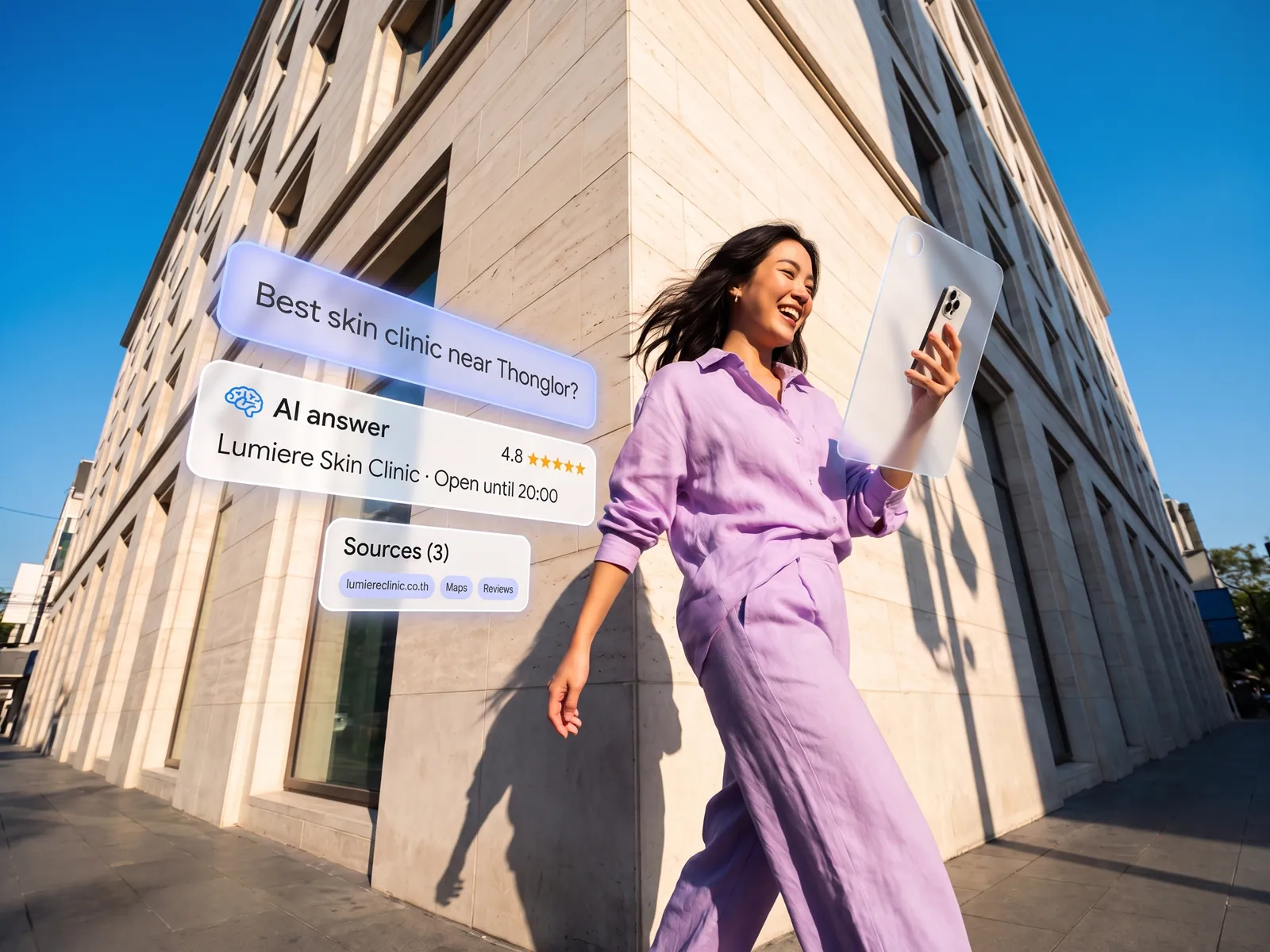
Most new patients start on Google or by asking an AI assistant which clinic does this procedure, for how much, with which doctor. What they find is review pages and other clinics’ ads, because the clinic’s own site is a homepage and a phone number. The interested ones message on LINE with the same questions, price, availability, how to prepare, and the admin answers one by one until late at night.
Booking over chat brings its own problems. The admin opens the doctor schedule in another system, appointments overlap, reminders get forgotten, no-shows come as a surprise, and the medical history sent over chat was never collected with the consent the law requires.
How we solve it
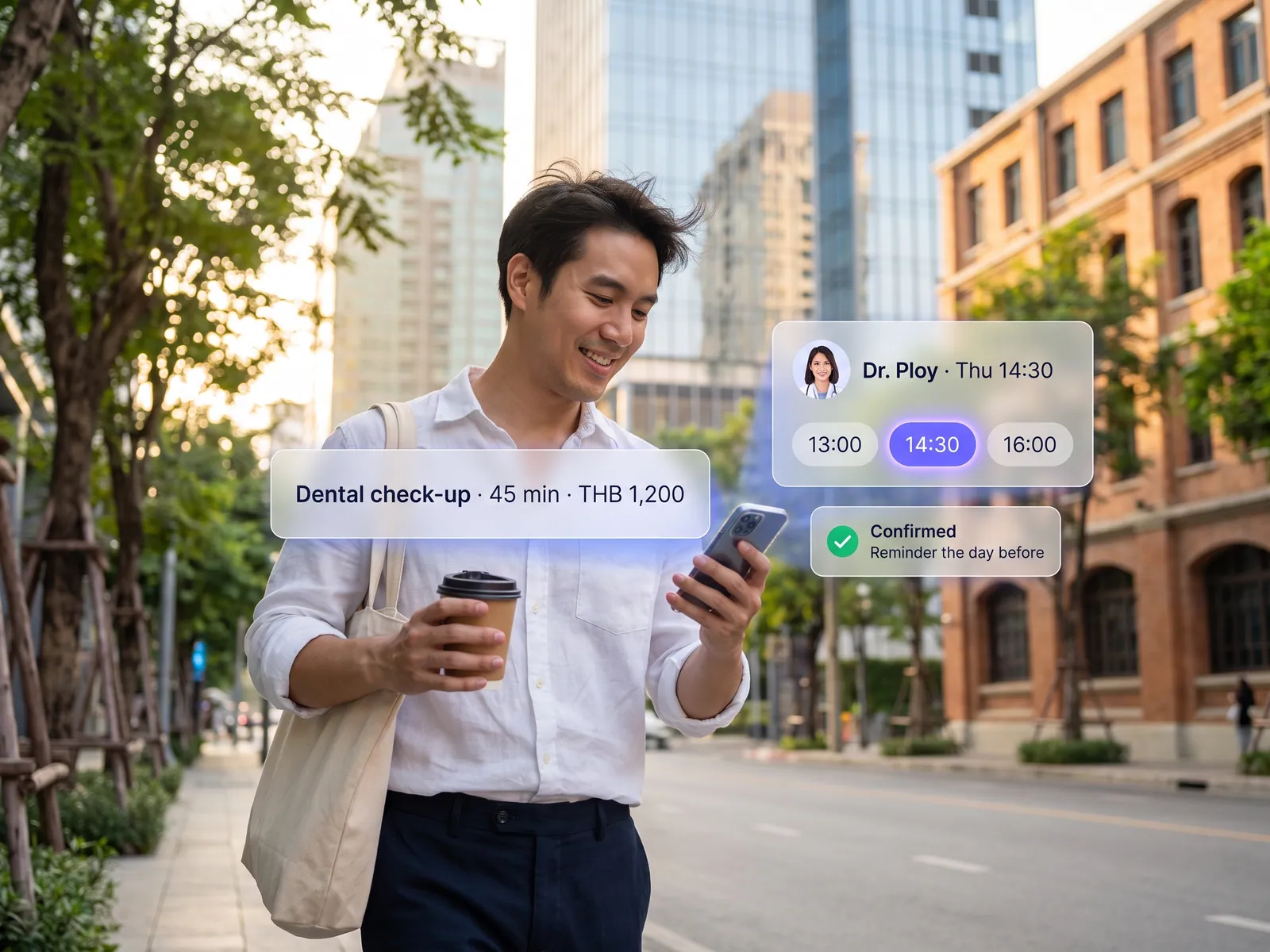
We build a clinic site that answers a patient’s first questions on one page: what the procedure is, which doctor does it, the price range, how to prepare, structured so Google and AI assistants can lift the answer when someone asks. The booking page connects to the real doctor schedule. The patient picks a doctor and a time, pays a deposit, and gets a LINE confirmation at once. Before the visit the system sends a reminder with preparation notes and lets the patient reschedule themselves.
AI chat on the site and on LINE answers what the admin repeats every day, price, preparation, parking, only from information the clinic has approved. Questions about symptoms, medication or whether a procedure suits someone go to a nurse or doctor with the full message attached, and the patient is told a person will reply.
Diagnosis, medical advice and deposit refunds always belong to people. The system stores history and consent under PDPA and records who opened a patient’s data and when. The dashboard shows which doctor’s schedule is full, which slots see no-shows, and which services people ask about and then do not book.
How it runs
Work comes in from
- Patients from Google and AI assistants
- Doctor schedules from the HIS
- Questions on LINE and the site
- Google Business Profile
What the AI does
- Answer from clinic-approved information
- Book against real schedules, take a deposit
- Remind and handle rescheduling
- Pass medical questions to a nurse
Where it lands
- Appointment in the HIS or queue system
- Confirmation and reminders on LINE
- History with PDPA consent
- Dashboard of slots and no-shows
Before and after
Before
After
Patients search the clinic’s name and find only reviews and rivals’ ads
Doctor, service and price pages rank, and AI assistants can cite them
The admin answers price and availability on LINE one by one until late
Patients book against the real schedule and get LINE confirmation at once
Double bookings, forgotten reminders, no-shows found out on the day
Reminders go out, patients reschedule themselves, risky slots show early
What you get
- 01
Pages for services, doctors, prices and FAQs, written so Google and AI assistants can cite them, and connected to Google Business Profile
- 02
Online booking against real doctor schedules from the HIS or the existing queue system, with a PromptPay deposit and instant LINE confirmation
- 03
Reminders on LINE before the visit with preparation notes, and self-service rescheduling without a phone call
- 04
AI chat that answers about services, prices, preparation and directions from information the clinic approved, and passes medical questions to a nurse
- 05
Intake forms and health-data consent that pass PDPA, plus a dashboard of open slots, no-shows and the services people ask about most
Who gets what
The HIS or queue system connects through an API with no changes to it. Health data is stored separately and encrypted, every access is logged, and the consent flow passes PDPA.
The admin stops repeating prices and availability all day. Nurses receive only the questions that need medical knowledge.
Who this fits
Aesthetic & dermatology clinicsDental clinicsPhysiotherapy clinicsVeterinary clinicsLASIK & eye centresGeneral practice clinics
Connects with what you already run
HISLINE OAOmisePromptPayGoogle Business ProfileFacebook Messenger
Development process
- 1
Discover
Requirements, users and success metrics, with scope and price fixed before we start.
- 2
Design
UX and system architecture; the prototype is approved before anything is built.
- 3
Build
AI-accelerated sprints with a demo every week, reviewed by senior engineers.
- 4
Test
QA, security and performance verified against the agreed scope.
- 5
Launch & care
Production deploy, team training, and a monthly care plan.

Turn your business problem into a system that works for you
Tell us today — get an executive-ready proposal with the plan and budget.
Talk to an engineer about thisMore solutions in AI Web Development
See the whole service Companies & factories Multilingual corporate website Retail & brands Online store on your own domain Hotels & resorts Booking engine on the hotel’s own site Service firms & B2B Customer portal Marketing teams & agencies Campaign & landing pages Operations & IT Internal web app Owners & marketing teams AI search visibility (GEO & AEO) Schools & universities Admissions site and student portal Real estate Project site with viewing appointments Restaurants & cafés Restaurant site with ordering and table booking Factories & wholesalers B2B catalogue and quote requests Tutoring schools & trainers Online course website