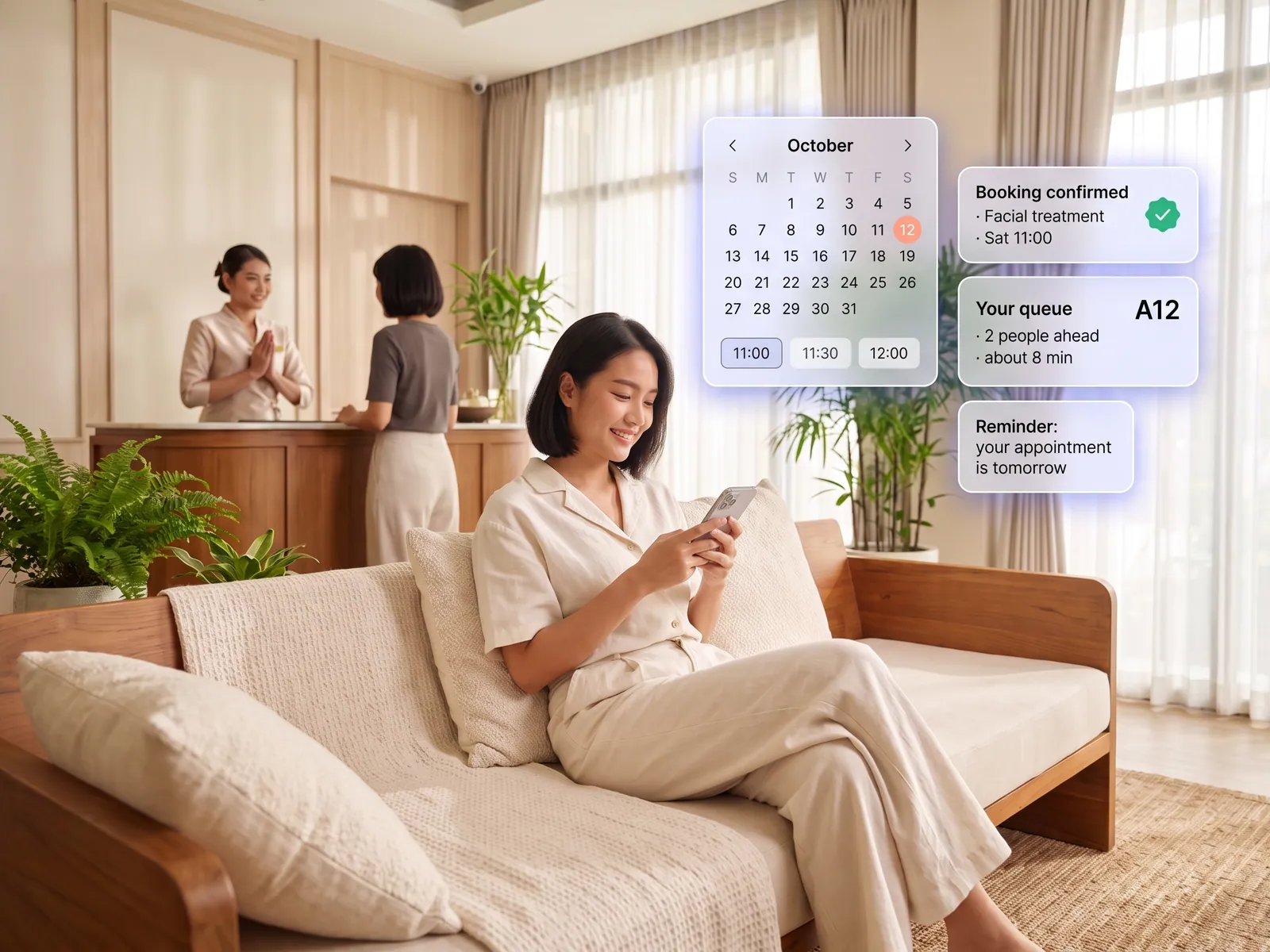
Every appointment gets a reminder, so empty slots show before the day itself, and you see which department waits longest, which doctor has gaps and what was collected each day.
Back to AI App Development
Clinics & hospitals · 13 / 13
Patient app and appointments
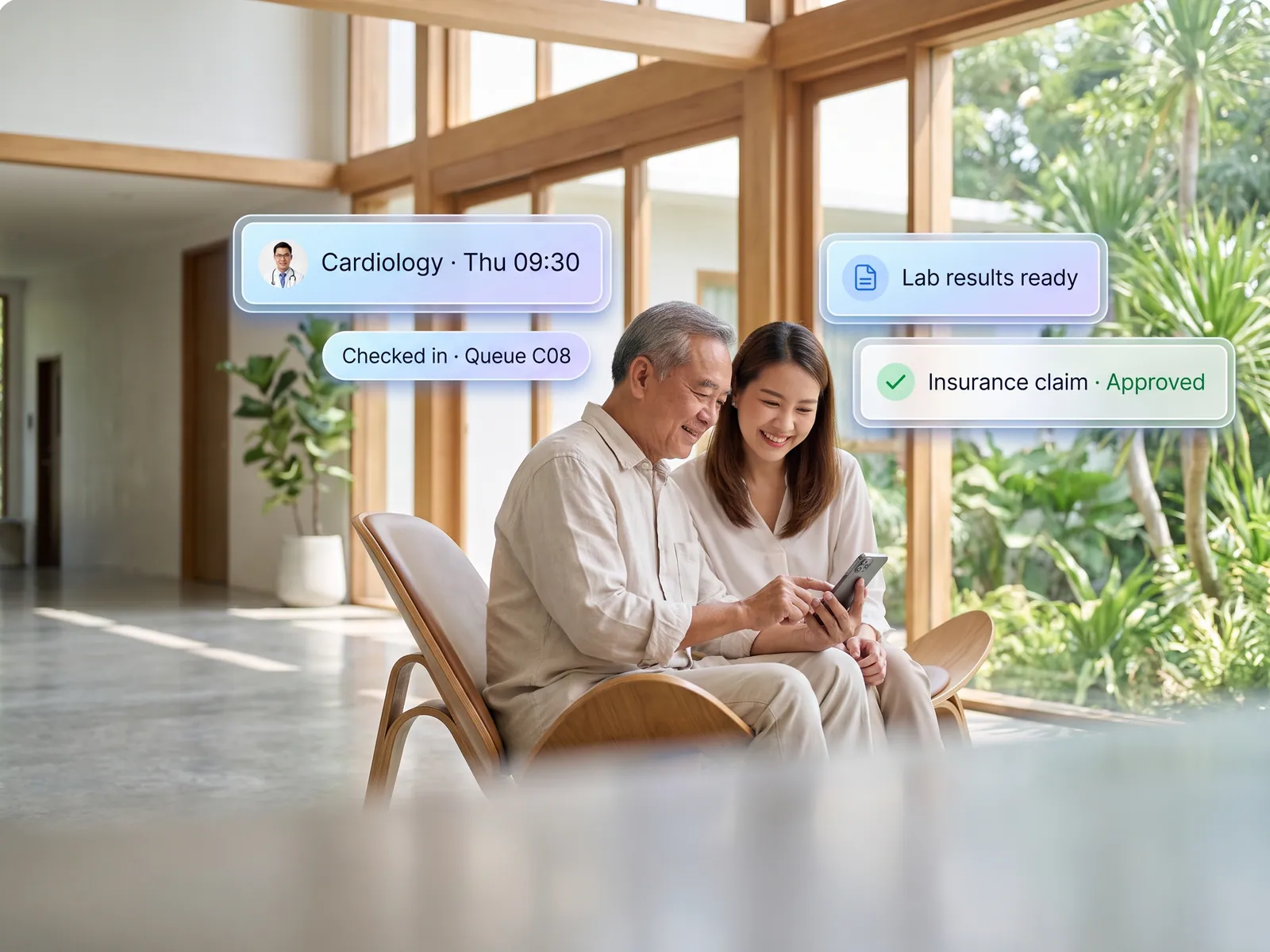
Patients book against the doctor’s real schedule, check in from their phone and see results and appointment slips themselves, and the morning phone line goes quiet.
 Clinics & hospitals
 “Patients phone to book in the morning until the line jams, wait an hour outside the consulting room, and drive in to collect results.”
The problem
Almost every clinic and hospital has an HIS holding appointments, results and histories, and patients have no way into it. To book they phone, and the morning line jams because everyone phones at once. They arrive and wait outside the consulting room with no idea how many are ahead. When the blood results are ready, they drive in to collect one sheet of paper. And the question of whether to fast before the test lands on the nurse at the counter who is already registering someone else.
A patient who forgets an appointment is an empty slot in the doctor’s schedule. A patient who forgets a refill is one who comes back worse. And nobody in the clinic has time to phone about either.
How we solve it
We build a patient app connected to your HIS. Patients see each doctor’s real availability, pick a time and book, and get a reminder before the visit with preparation instructions. On arrival they check in from their phone and see how many are ahead, so they can wait wherever they like. Results the doctor has released appear in the app with the next appointment slip, and a reminder goes out when a repeat prescription is due.
The in-app assistant reads the clinic’s information and answers opening hours, preparation instructions, approximate costs and which insurers are accepted. Anything about symptoms it passes straight to a nurse with the context attached and does not answer itself. Treatment can be paid for in the app, and the claim goes to the insurer with no form filled in twice.
Diagnosis, prescribing and releasing results stay with the doctor every time. The system shows only what the doctor has approved. Health data is encrypted on the device and in transit, every access is logged, and the patient gives PDPA consent in the app before seeing anything.
How it runs
Work comes in from
- Patients book and check in from the app
- Doctor schedules and results from the HIS
- Patient questions
- The patient’s insurance cover
What the AI does
- Match real doctor availability
- Remind on appointments and refills
- General answers; symptoms go to a nurse
- Prepare the claim and the receipt
Where it lands
- HIS and queue system
- The patient’s app
- A nurse, for anything about symptoms
- The insurer
Before and after
Before
After
The phone line jams all morning because everyone books at once
Patients book against the doctor’s real schedule, with a reminder before the visit
An hour outside the consulting room with no idea how many are ahead
Check in from a phone, see how many are ahead, wait anywhere
Blood results ready, and a drive in to collect a sheet of paper
Released results appear in the app with the next appointment slip
What you get
- 01
An appointment app showing real doctor availability, with reminders and check-in from a phone
- 02
Results, appointment slips and treatment history on demand, with refill reminders
- 03
Built to PDPA and health-data rules, from encryption to access rights
- 04
An in-app assistant that answers preparation instructions, opening hours and insurance questions from the clinic’s own information, and passes anything about symptoms to a nurse
- 05
Payment for treatment and medicine in the app, with the insurance claim submitted and the receipt issued automatically, so fewer people queue at the cashier
Who gets what
Connected to the HIS through HL7 FHIR or the vendor’s supported API, read-only first. Health data encrypted, every access logged, and deployment on the hospital’s own servers so nothing leaves the building.
Counter nurses stop taking booking calls and answering whether to fast. Patients know their place in the queue and get results without travelling in.
Who this fits
Specialist clinicsPrivate hospitalsDental chainsHealth-check centres & labsPhysiotherapy clinicsVeterinary hospitals
Connects with what you already run
Existing HISQueue systemLINE OAPayment gatewayHealth insurersLaboratory LIS
Development process
- 1
Discover
Requirements, users and success metrics, with scope and price fixed before we start.
- 2
Design
UX and system architecture; the prototype is approved before anything is built.
- 3
Build
AI-accelerated sprints with a demo every week, reviewed by senior engineers.
- 4
Test
QA, security and performance verified against the agreed scope.
- 5
Launch & care
Production deploy, team training, and a monthly care plan.

Turn your business problem into a system that works for you
Tell us today — get an executive-ready proposal with the plan and budget.
Talk to an engineer about thisMore solutions in AI App Development
See the whole service Brands & retailers Customer app Shops with regulars Loyalty and membership app Appointment businesses Booking and queue app Field crews & couriers Field service and delivery app Management & HR Internal operations app Brands with a LINE OA LINE Mini App (LIFF) Businesses that must know their customer e-KYC and digital ID verification Schools & institutes School management system Tutoring schools & exam bodies Online testing platform Restaurants & cafés Restaurant POS and ordering Hotels & resorts Guest app and hotel booking Condo & estate management Resident app for juristic persons