Teams resolve incidents faster from the experience the company has already paid for, and pass the regulator’s audit with no data leaving the closed network.
Back to Private LLM
Energy & utilities · 11 / 12
Private LLM for critical infrastructure
Manuals, standards and past incident reports searchable in plain language, inside the company’s closed network, working without an internet connection.
 Energy & utilities
 “Operating data, maintenance plans and network drawings are critical-infrastructure data that policy keeps inside a closed network, so teams still search manuals in paper binders.”
The problem
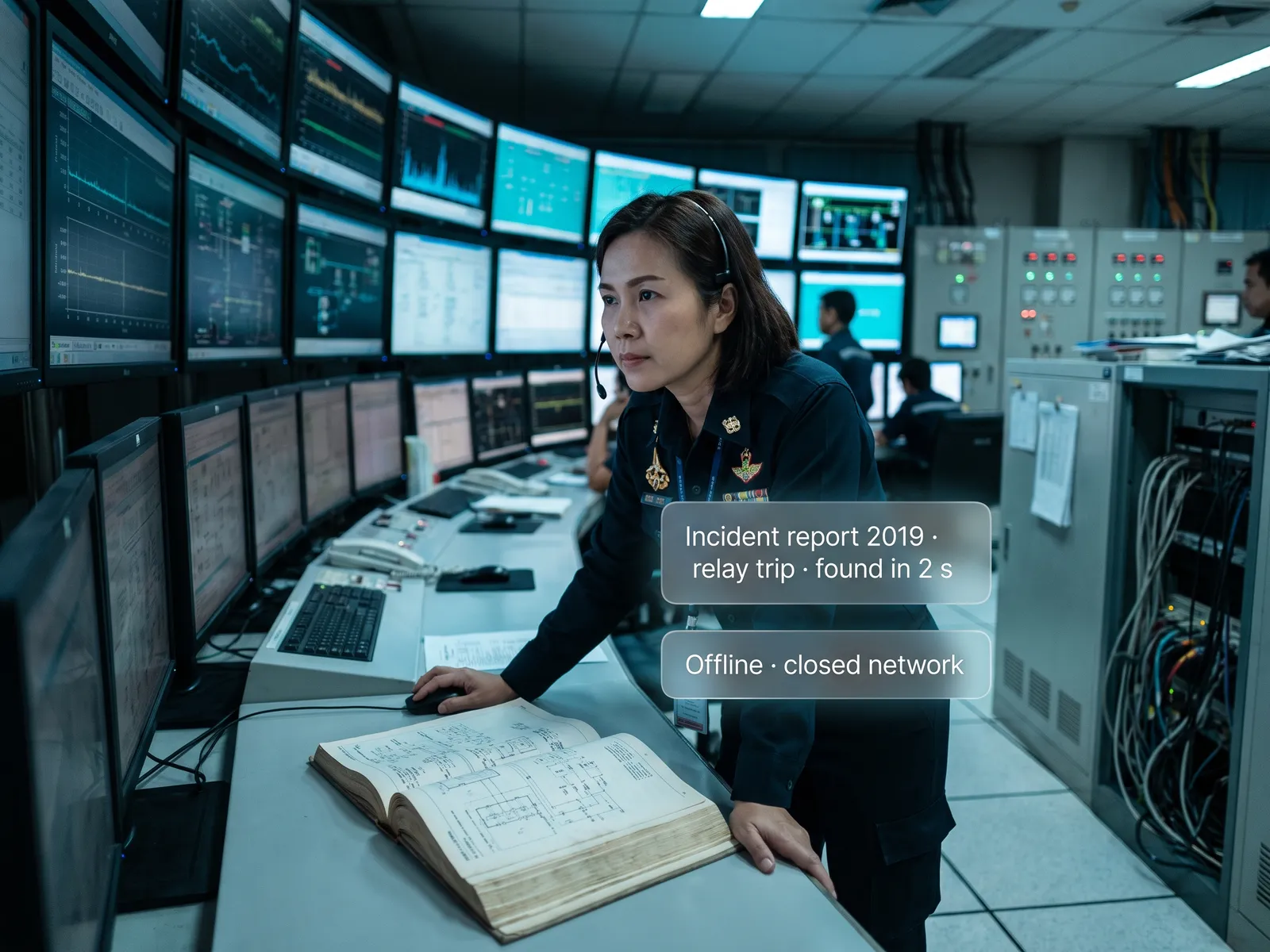
Power plants, refineries and grid operators hold decades of machine manuals, operating procedures and incident reports. When something happens at night, the shift supervisor has to find out whether it has happened before and how it was resolved, from paper binders and files on a file server named however the author felt like naming them.
Operating data, maintenance plans and network drawings are critical-infrastructure data that policy and the regulator keep inside a closed network. Cloud tools are off the table entirely, even for an ordinary manual.
How we solve it
We install a language model in the company’s closed network, on a server with no internet connection, and index the manuals, standards, incident reports and the CMMS and historian data you permit. An operator in the control room types a plain question, such as "has boiler pressure dropped like this before", and gets the old incident report, the standard procedure and the manual page it came from.
Permissions are split by plant and area, so one plant’s team sees only its own data, and every question is logged to the cybersecurity standard the regulator sets. Model and index updates go through the change process your security team approves. There are no external API calls.
The system searches and drafts. Shutting down a unit, ordering a repair or changing any value in the control system remains a decision for the authorised engineer under the procedure. The system reads from the historian only and writes nothing back.
How it runs
Work comes in from
- Manuals and operating procedures
- Past incident reports
- Data from the CMMS and historian
- Questions from the control room and the floor
What the AI does
- Index inside the closed network
- Find the similar incidents
- Answer with the source cited
- Draft reports and work orders
Where it lands
- Answers to the supervisor in the control room
- Incident report drafts to check
- Work orders into the CMMS after approval
- Usage log for the auditors
Before and after
Before
After
Something happens at night and the shift supervisor opens paper binders to find out whether it has happened before
Type the symptom and get the old report and the standard procedure within the minute
The incident report is written hours after the shift ends
The system drafts the report from floor notes; the supervisor checks and sends it
The senior engineers’ knowledge is in no system at all
Every incident and its fix is searchable inside the closed network
What you get
- 01
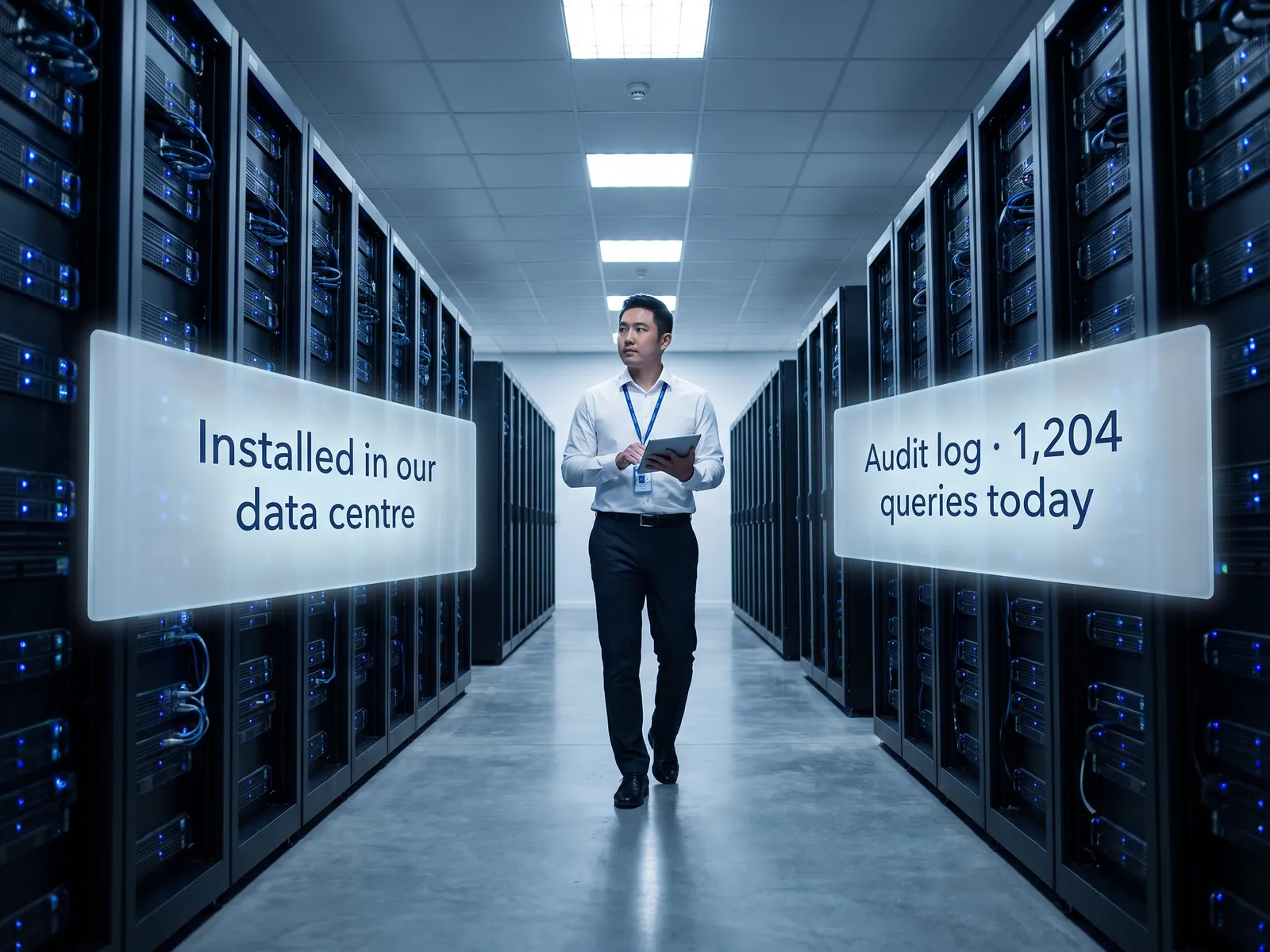
Installed in the company’s closed network, working without internet access
- 02
Searches manuals, standards and past incident reports in plain language, citing the source
- 03
Permissions per plant or area, with usage logged to cybersecurity standards
- 04
Drafts of incident reports and maintenance work orders from floor notes and CMMS data, for the shift supervisor to check
- 05
Questions answered from operating data in the historian, such as when this abnormal reading last occurred and how it was resolved
Who gets what
Installed in the closed network with no internet connection, reading from the historian and CMMS only, permissions per plant from Active Directory, and usage logged to the standard the regulator sets.
The shift supervisor stops digging through binders at two in the morning, and technicians get the right procedure on a tablet on the floor.
Who this fits
Power plants & independent producersRefineries & petrochemicalsElectricity & water utilitiesGas pipelines & fuel terminalsRenewable energy operators
Connects with what you already run
Active DirectoryCMMSSCADA HistorianFile ServerSAP PMSharePoint
Development process
- 1
Discover
Requirements, users and success metrics, with scope and price fixed before we start.
- 2
Design
UX and system architecture; the prototype is approved before anything is built.
- 3
Build
AI-accelerated sprints with a demo every week, reviewed by senior engineers.
- 4
Test
QA, security and performance verified against the agreed scope.
- 5
Launch & care
Production deploy, team training, and a monthly care plan.

Turn your business problem into a system that works for you
Tell us today — get an executive-ready proposal with the plan and budget.
Talk to an engineer about thisMore solutions in Private LLM
See the whole service Legal & contracts Private LLM for contract work HR teams HR assistant on a Private LLM Finance & accounting Private LLM for financial documents R&D & engineering Private LLM for engineering knowledge Customer service teams Customer reply assistant on a Private LLM Executives & the board Private LLM for executives and the board Banks & financial institutions Private LLM for financial institutions Hospitals Private LLM for health data Law firms & consultancies Private LLM for clients’ confidential documents Telecoms & ISPs Private LLM for telecom operators Insurers Private LLM for claims and underwriting