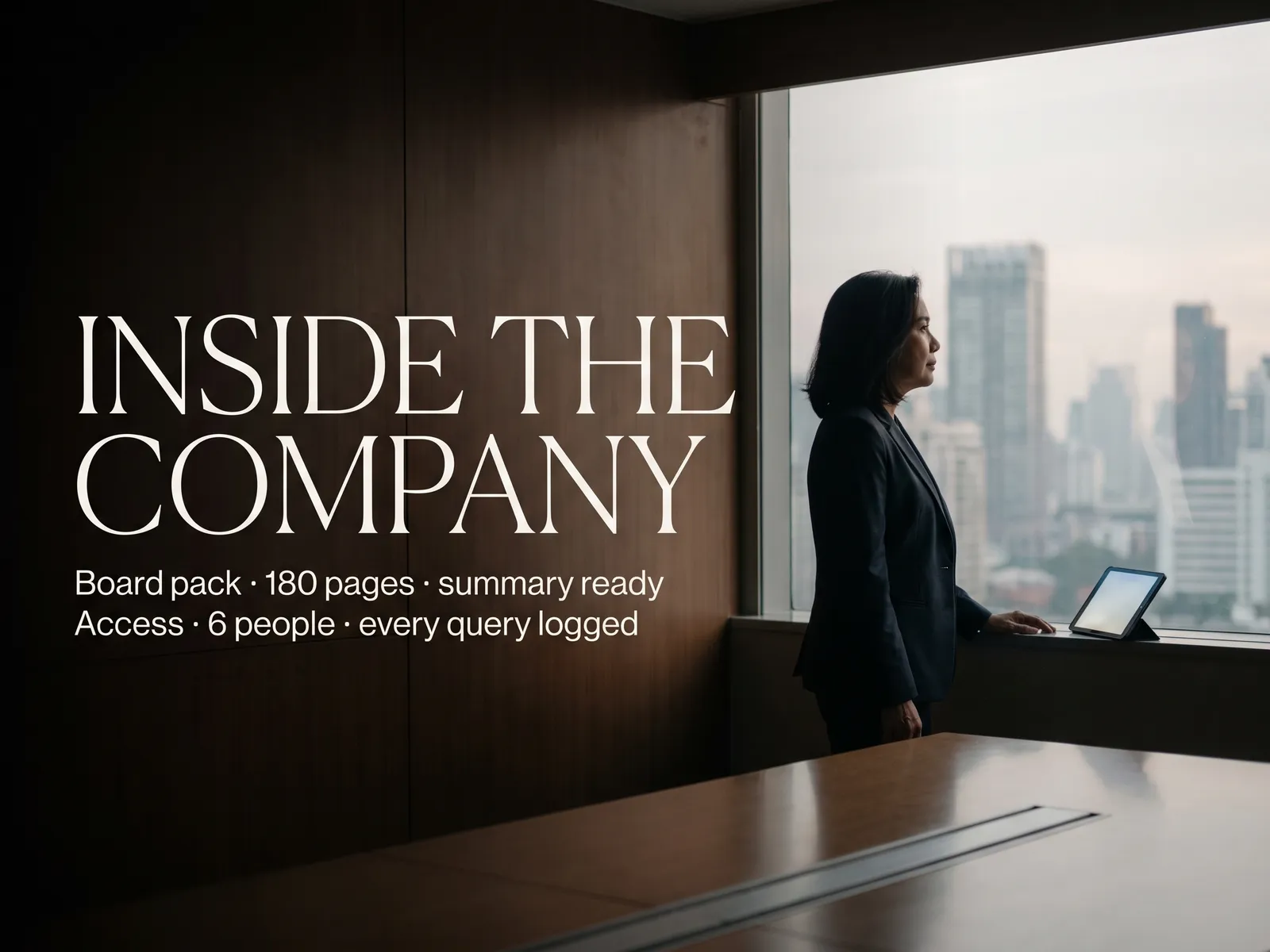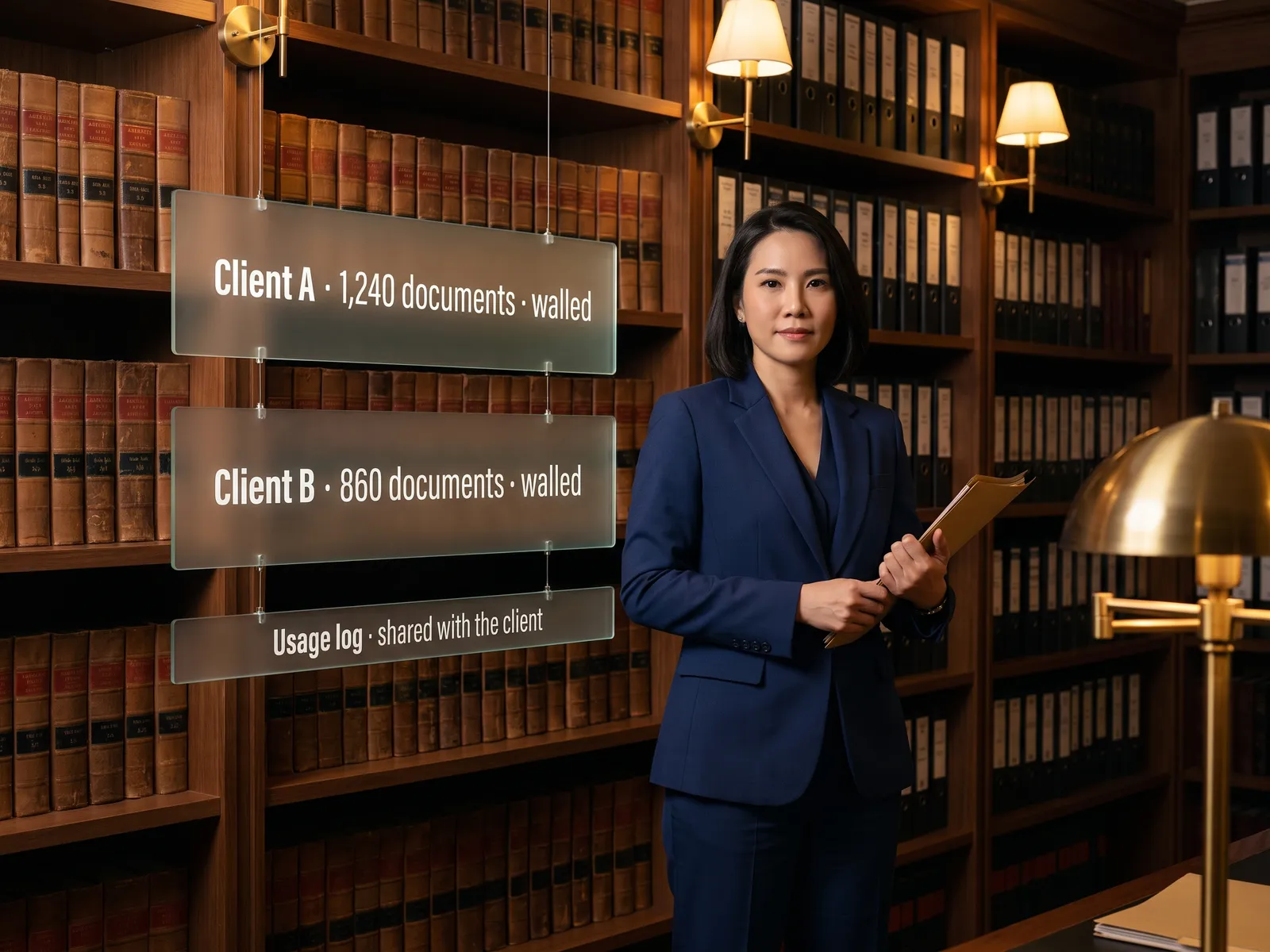
Staff get the tool they want without going behind anyone’s back, and the bank can answer every auditor’s question about where the data is and who touched it.
Back to Private LLM
Banks & financial institutions · 07 / 12
Private LLM for financial institutions
An AI tool that summarises, searches and drafts like the public ones, installed in the bank’s data centre, with permissions by org structure and an audit log compliance can inspect.
 Banks & financial institutions
 “Staff quietly use ChatGPT to summarise customer documents because it’s fast. Compliance finds out, bans it, and everyone goes back to doing it by hand.”
The problem
Credit officers, compliance and branches have documents to read every day: borrowers’ financials, a new circular, an operating manual revised every quarter. A public tool summarises them in a minute, so some staff use it quietly until compliance finds out and bans it, because customer data cannot leave the bank under the regulator’s rules or under PDPA.
That leaves the bank with two bad options: let people use it quietly and risk a leak, or ban it and watch everyone go back to reading by hand.
How we solve it
We install a language model in the bank’s data centre, on your own servers or in a cloud account the bank controls, on Kubernetes run by your own infrastructure team. Staff sign in with their bank account through Active Directory and use it to summarise documents, search the rules and draft memos the way they would with a public tool, with everything staying inside the bank’s network.
Permissions follow the org structure, so a credit team sees only the customers in its own portfolio, and every question goes into an audit log compliance can open. We hand over with penetration-test results and auditor documentation, following the approach the bank’s compliance and security teams set.
The system summarises and drafts. Loan approvals, replies to customers about their accounts and anything with a financial effect remain decisions for staff with the authority the rules give them. The system sends nothing out of the bank on its own.
How it runs
Work comes in from
- Borrower documents from the LOS
- Circulars and operating manuals
- Questions from branches and the call centre
- Documents in SharePoint
What the AI does
- Check permissions by org structure
- Summarise and search with references
- Draft memos and answers
- Record every question in the audit log
Where it lands
- One-page summary to the credit team
- Answers to branch staff
- Drafts for the authorised officer to check
- Audit log for compliance
Before and after
Before
After
Staff use a public tool quietly; compliance has no idea what data went out
Everyone uses the same tool in the bank’s data centre, with an audit log
Summarising one borrower’s financials takes half a day
The financials are summarised with the follow-up questions in minutes
A rule changes and branches phone head office all day
Branch staff type the question and get the rule that applies at once
What you get
- 01
A model in the bank’s data centre that summarises, searches and drafts like the public tools
- 02
Permissions by org structure and an audit log compliance can inspect for every question
- 03
Penetration-tested, with documentation ready for internal and external auditors
- 04
An assistant for the credit team that turns a borrower’s financials and documents into one page, with the points that need a follow-up question
- 05
Search across circulars, rules and internal operating manuals in plain questions, for branches and the call centre
Who gets what
Installed on Kubernetes in your own data centre, sign-in through Active Directory, no external API calls, penetration-tested and handed over with auditor documentation.
Credit officers and branch staff stop reading hundred-page documents by hand, and stop worrying that wanting to work faster will get them in trouble.
Who this fits
Commercial banksSecurities firms & asset managersLeasing & consumer financeCard issuers & payment companiesLarge savings cooperatives
Connects with what you already run
Active DirectoryCore BankingLOSSharePointKubernetesMicrosoft 365
Development process
- 1
Discover
Requirements, users and success metrics, with scope and price fixed before we start.
- 2
Design
UX and system architecture; the prototype is approved before anything is built.
- 3
Build
AI-accelerated sprints with a demo every week, reviewed by senior engineers.
- 4
Test
QA, security and performance verified against the agreed scope.
- 5
Launch & care
Production deploy, team training, and a monthly care plan.

Turn your business problem into a system that works for you
Tell us today — get an executive-ready proposal with the plan and budget.
Talk to an engineer about thisMore solutions in Private LLM
See the whole service Legal & contracts Private LLM for contract work HR teams HR assistant on a Private LLM Finance & accounting Private LLM for financial documents R&D & engineering Private LLM for engineering knowledge Customer service teams Customer reply assistant on a Private LLM Executives & the board Private LLM for executives and the board Hospitals Private LLM for health data Law firms & consultancies Private LLM for clients’ confidential documents Telecoms & ISPs Private LLM for telecom operators Energy & utilities Private LLM for critical infrastructure Insurers Private LLM for claims and underwriting