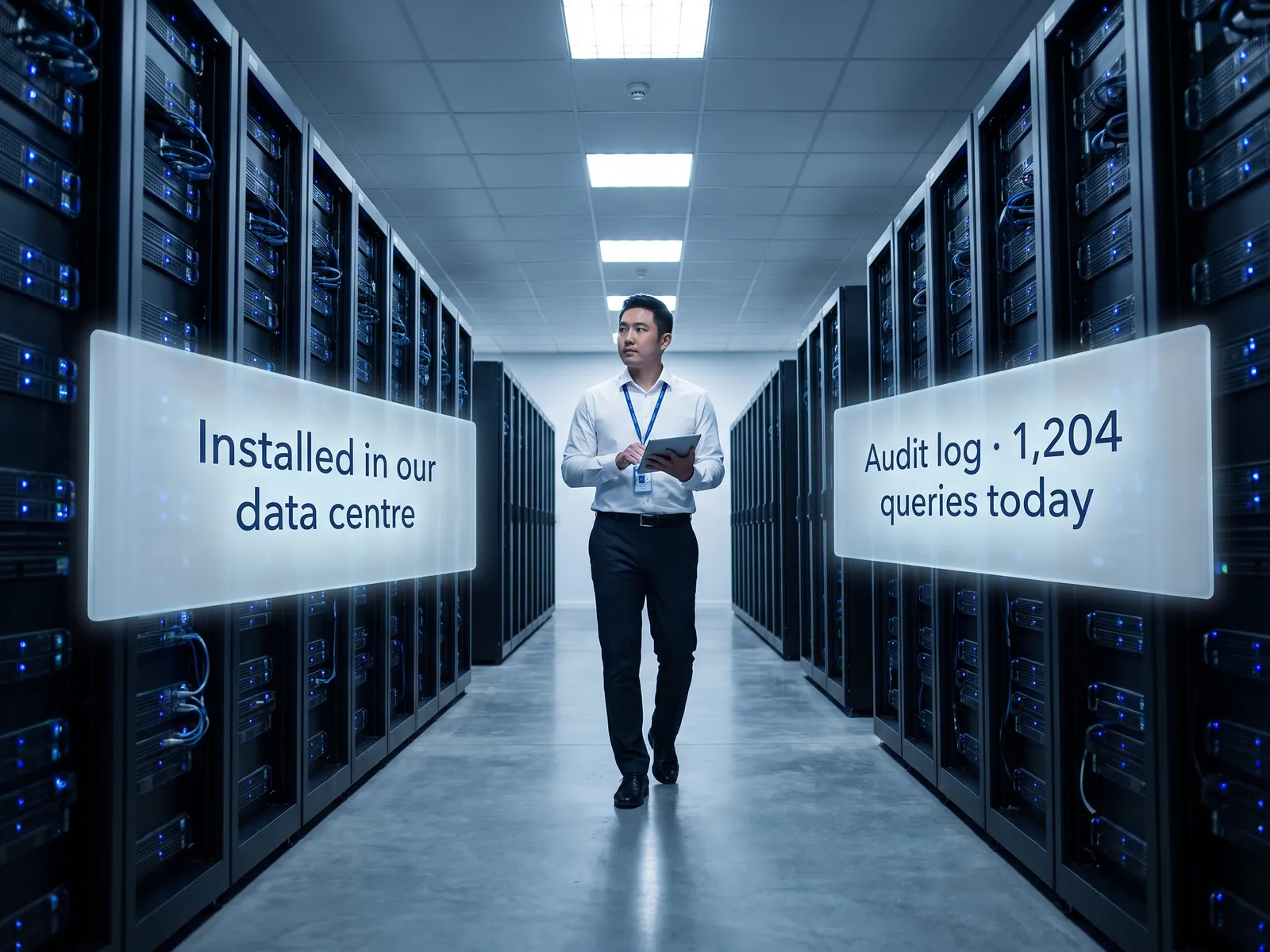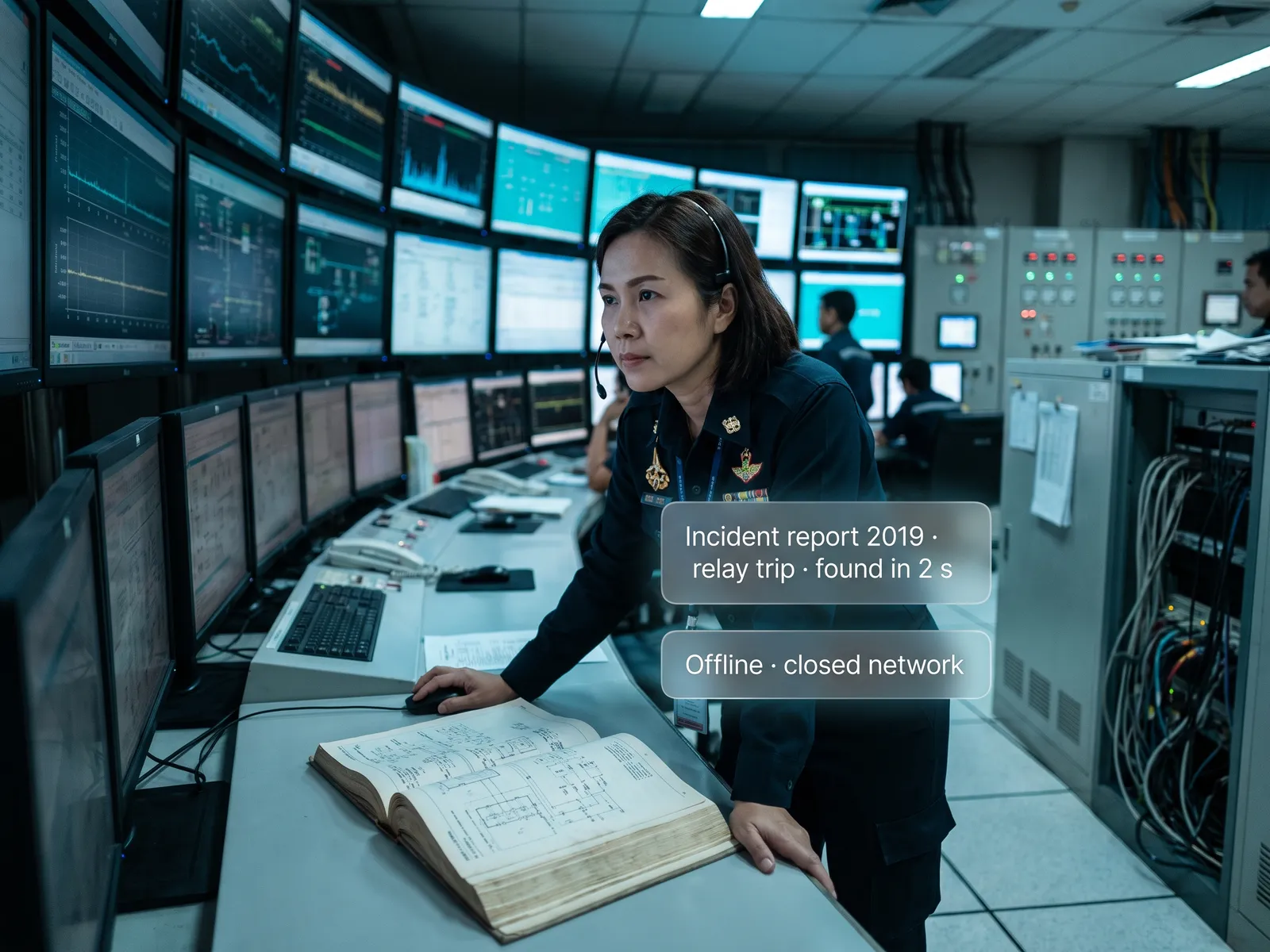
You see what customers call about every day without waiting for a report, and millions of subscribers’ data stays on company systems alone.
Back to Private LLM
Telecoms & ISPs · 10 / 12
Private LLM for telecom operators
Call-centre conversations summarised, network tickets searchable and replies drafted from subscriber data, on the operator’s own systems, with millions of subscribers’ data going nowhere.
 Telecoms & ISPs
 “We have tens of thousands of call-centre conversations a day and network tickets every technician writes differently. We want AI to summarise them, and subscriber data cannot go outside, under our licence and under PDPA.”
The problem
An operator takes tens of thousands of call-centre conversations a day. After-call notes range from one line to a page, and network tickets are written differently by every technician’s team. When an outage hits one area, the NOC scrolls back looking for whether it has happened before, and the service team knows complaints are up without being able to put a report together before the end of the week.
Subscriber data sits under the licence and under PDPA, so it cannot go out for analysis on someone else’s cloud, and at this volume paying an outside provider per request does not add up. So the team uses AI only on data with the names stripped out, which is close to useless in practice.
How we solve it
We install a language model on Kubernetes in the operator’s data centre, or in a cloud account the company controls, sized to the daily call volume, and connect it to the contact-centre, billing and ticketing systems you already run. When a call ends, the system writes the reason, the outcome and the open items into the CRM, and when the customer calls again the agent sees the summary before picking up.
On the network side, the NOC asks whether this symptom has appeared at this exchange before and gets the old tickets with the fix that worked. Everything runs inside your network. Permissions are split by team and area, personal data is masked by permission level, and every question goes into an audit log for the regulator and the DPO.
The system summarises, searches and drafts. Bill adjustments, cancellations and dispatching a technician remain decisions for agents and team leads. The system sends nothing to customers on its own.
How it runs
Work comes in from
- Call-centre calls and after-call notes
- Network tickets and outage reports
- Subscriber data from billing and CRM
- Complaints from every channel
What the AI does
- Mask personal data by permission
- Summarise every call and group the issues
- Find old tickets and the fix that worked
- Draft the reply for the agent
Where it lands
- Call summary in the CRM before the next call
- Answers to the NOC with the old tickets
- Daily complaint report to the network team
- Audit log for the regulator
Before and after
Before
After
A customer calling back has to tell the whole story again because the after-call note makes no sense
The agent sees a summary of this customer’s last calls before picking up
The NOC scrolls through old tickets by hand during an incident
The NOC types the symptom and gets the old tickets with the fix within the minute
The complaint report is put together at the end of the week
Complaints are grouped daily and an unusual area is flagged to the network team at once
What you get
- 01
A model in the operator’s data centre that summarises every call-centre conversation into the reason for the call, the outcome and what is still open
- 02
An assistant in the agent’s screen that reads the number’s plan, outstanding balance and usage history by permission and drafts the reply
- 03
Search across network tickets and past outage reports in plain questions, so the NOC finds the recurring fault that was fixed before
- 04
Daily grouping of complaints with the areas where calls are rising unusually, sent to the network and service teams
- 05
ID numbers and personal usage data masked by permission level, with an audit log on every question
Who gets what
Installed on Kubernetes in your own data centre, sized to call volume, connected to the contact centre and billing through their APIs, permissions from Active Directory and an audit log on every question.
Call-centre agents stop writing long after-call notes and stop asking customers what the last call was about. The NOC stops reading old tickets one at a time.
Who this fits
Mobile operatorsInternet & broadband providersData centre & cloud providersCable TV & digital servicesEnterprise telecom providers
Connects with what you already run
BillingCRMGenesysServiceNowActive DirectoryKubernetes
Development process
- 1
Discover
Requirements, users and success metrics, with scope and price fixed before we start.
- 2
Design
UX and system architecture; the prototype is approved before anything is built.
- 3
Build
AI-accelerated sprints with a demo every week, reviewed by senior engineers.
- 4
Test
QA, security and performance verified against the agreed scope.
- 5
Launch & care
Production deploy, team training, and a monthly care plan.

Turn your business problem into a system that works for you
Tell us today — get an executive-ready proposal with the plan and budget.
Talk to an engineer about thisMore solutions in Private LLM
See the whole service Legal & contracts Private LLM for contract work HR teams HR assistant on a Private LLM Finance & accounting Private LLM for financial documents R&D & engineering Private LLM for engineering knowledge Customer service teams Customer reply assistant on a Private LLM Executives & the board Private LLM for executives and the board Banks & financial institutions Private LLM for financial institutions Hospitals Private LLM for health data Law firms & consultancies Private LLM for clients’ confidential documents Energy & utilities Private LLM for critical infrastructure Insurers Private LLM for claims and underwriting