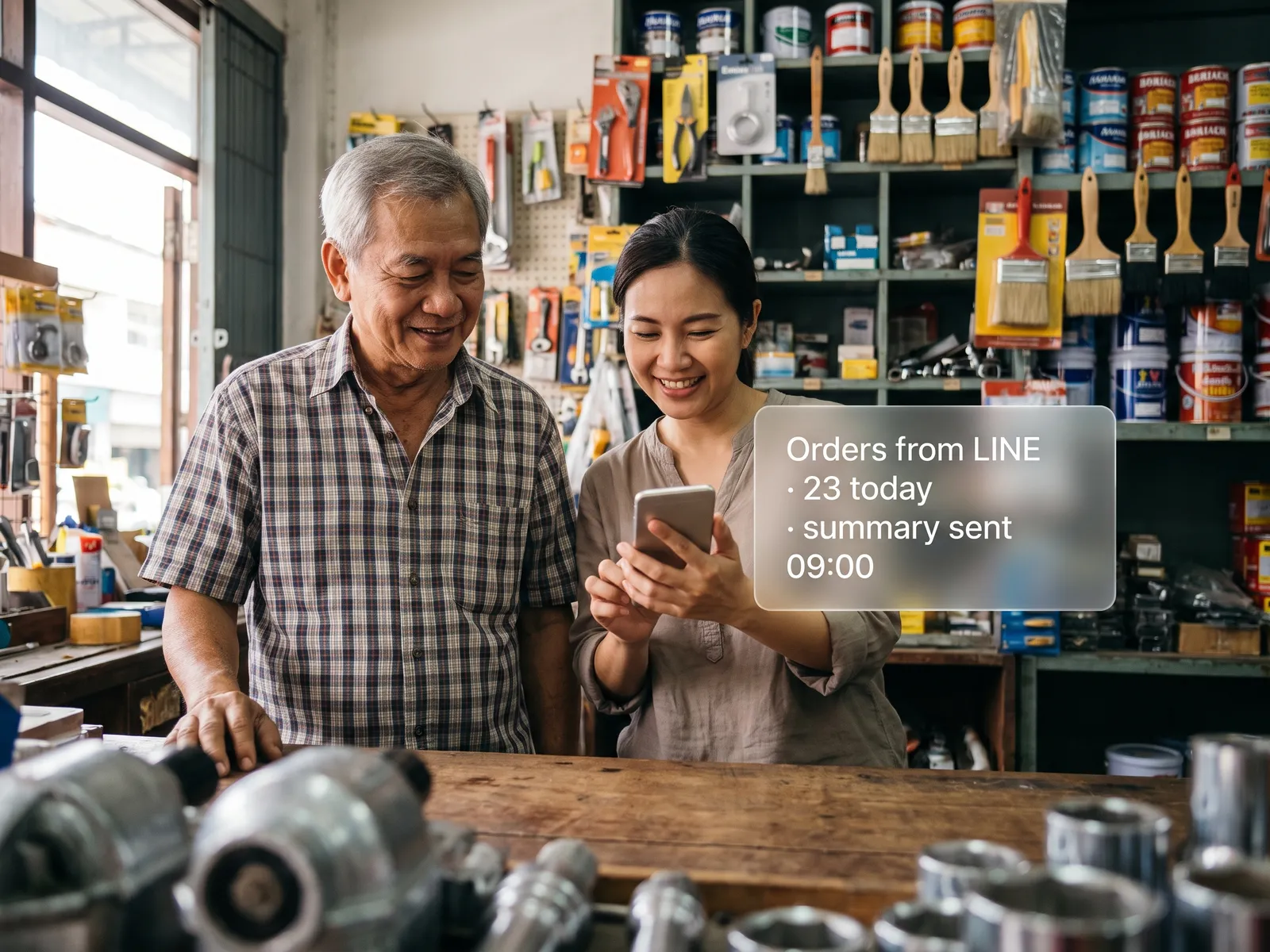
More trips from GPS data you already pay for, a business that does not stall when the dispatcher is away, and tighter arrival times for the big customers.
Back to AI Transformation
Logistics companies · 12 / 13
AI roadmap for transport and warehousing
Use the GPS, job-sheet and delivery-time data you already hold, start with one zone, and stop depending on one dispatcher to plan the day or tell customers when goods arrive.
 Logistics companies
 “Routes are planned from one dispatcher’s experience. The day he’s off, everything slips, and customers asking when their goods arrive get a rough guess.”
The problem
Most transport companies hold more data than they think. Every truck has GPS, every job sheet has a pickup and a delivery time, and the big customers send orders by EDI or email every morning. But which truck runs which route still lives in the dispatcher’s head, along with the fact that this customer cannot take deliveries after ten and that lane will not take a six-wheeler. Nobody has ever written that down.
The day he is off sick, the whole day slips: trucks overlap routes, goods arrive late, and customer service can only give a rough guess on arrival times because it has to phone each driver.
How we solve it
We start with a few days beside the dispatcher, writing down every condition he uses to decide, then put the GPS and job-sheet history next to the plan to see where actual delivery times diverge. From there we rank which use case pays back most for your fleet size and type of work.
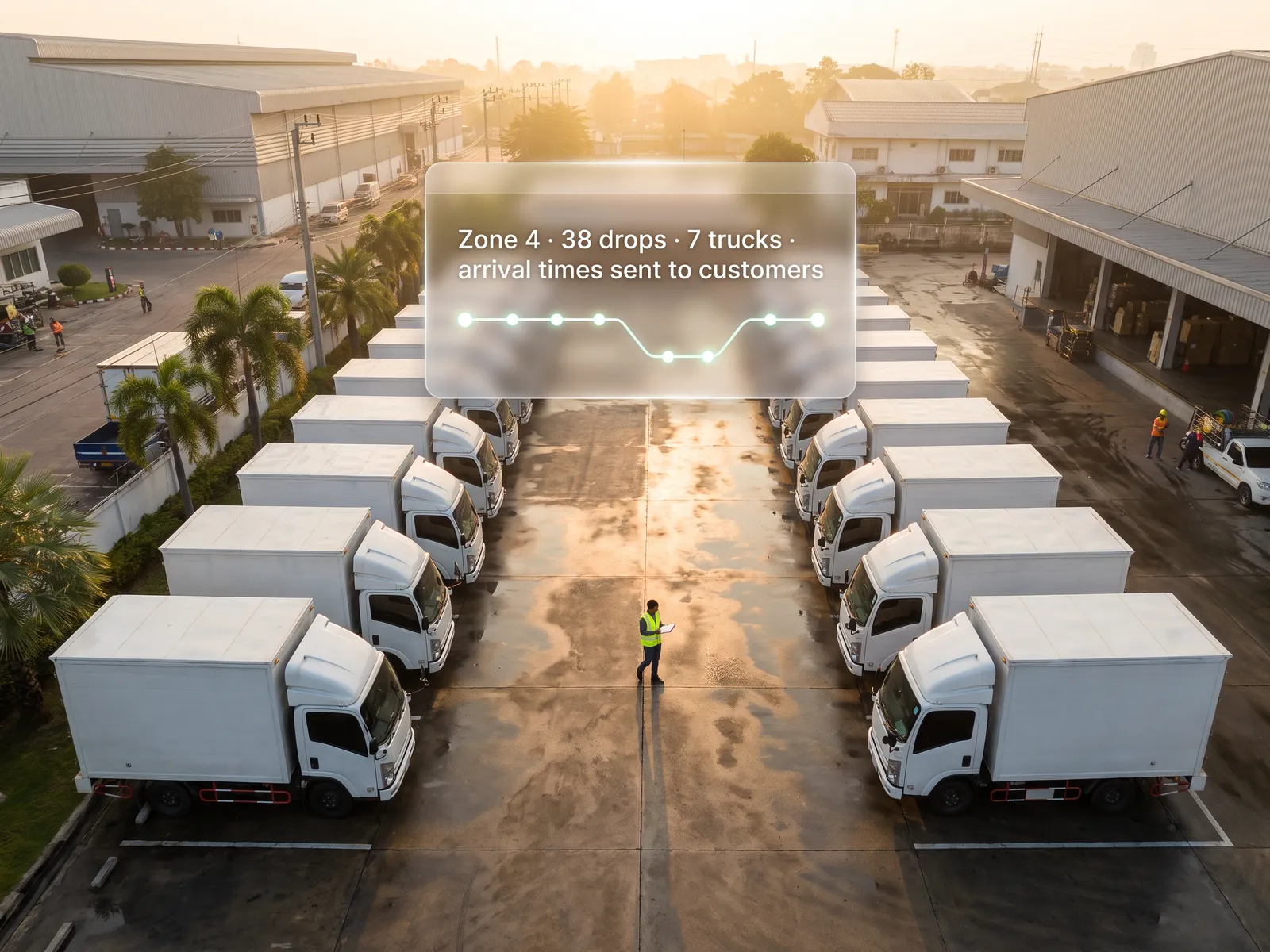
The pilot we build together covers one zone. Every evening it reads tomorrow’s job sheets and proposes which truck takes which stops in which order, using the dispatcher’s written conditions and real times from GPS. The dispatcher opens it, adjusts wherever he knows better, and confirms. Next morning each customer gets a LINE message with a delivery window, and another when the truck leaves the previous stop.
Releasing trucks, accepting urgent jobs and deciding what to do when a truck breaks down stay with the dispatcher. The system proposes and notifies. We measure trips per day in the pilot zone and the number of calls customers make, against the other zones, then expand one zone at a time.
How it runs
Work comes in from
- Truck positions from GPS
- Job sheets from the TMS, email or LINE
- Actual pickup and delivery times
- Days beside the dispatcher and drivers
What the AI does
- Assess the data and write down the rules
- Rank use cases by payback
- Deliver the 90-day roadmap
- Build the one-zone routing pilot together
Where it lands
- A daily route plan awaiting the dispatcher
- Delivery windows sent to customers on LINE
- Dashboard of trips per day and on-time rate
- A plan for the next zone
Before and after
Before
After
Routes planned from one dispatcher’s head, and the day he is off, everything slips
The system proposes routes every evening; the dispatcher checks and confirms
Customers ask when goods arrive and someone phones each driver
Customers get a delivery window on LINE before they think to ask
Each customer’s conditions written down nowhere
Every condition kept as a company rule anyone covering can use
What you get
- 01
An assessment of the GPS, job-sheet and delivery-time data you hold: how far back it goes, whether the systems agree, and which parts still live on paper or in LINE
- 02
A list of use cases ranked by payback, such as daily routing, delivery-time prediction, automatic customer updates and job sheets read from photos
- 03
A 90-day roadmap that picks one zone of trucks to start with, with the budget, team and metric
- 04
A pilot built together: a daily route proposal for that zone, checked and adjusted by the dispatcher before the trucks leave, with delivery windows sent to customers on LINE
- 05
A written rulebook that turns the dispatcher’s conditions into company rules, and a workshop so dispatch and customer service run the system themselves
Who gets what
Positions read from your GPS provider through its API, the TMS connected read-only first, no change to what drivers use, and customer messages sent through the company’s LINE OA.
The dispatcher starts the day from a plan already worked out and adjusts the exceptions, customer service stops phoning drivers, and drivers get their stop order on their phone.
Who this fits
General freight and truckingRetail distributionCold chain and food deliveryWarehousing and fulfilmentConstruction materials haulageManufacturers with their own fleet
Connects with what you already run
TMSWMSGPS trackingLINE OAERPGoogle Sheets
Development process
- 1
Discover
Requirements, users and success metrics, with scope and price fixed before we start.
- 2
Design
UX and system architecture; the prototype is approved before anything is built.
- 3
Build
AI-accelerated sprints with a demo every week, reviewed by senior engineers.
- 4
Test
QA, security and performance verified against the agreed scope.
- 5
Launch & care
Production deploy, team training, and a monthly care plan.

Turn your business problem into a system that works for you
Tell us today — get an executive-ready proposal with the plan and budget.
Talk to an engineer about thisMore solutions in AI Transformation
See the whole service Executives & finance AI roadmap for executives and finance Sales teams AI roadmap for sales Operations & production AI roadmap for production and operations HR teams AI roadmap for HR Marketing teams AI roadmap for marketing IT & data AI roadmap for IT and data Organisations rolling out AI Forward Deployed Engineers (FDE) for AI adoption Factories & manufacturers AI roadmap for a factory Hospitals & clinic groups AI roadmap for healthcare providers Banking, insurance & securities AI roadmap for financial institutions Multi-branch retail AI roadmap for retail Family businesses & SMEs AI roadmap on a limited budget