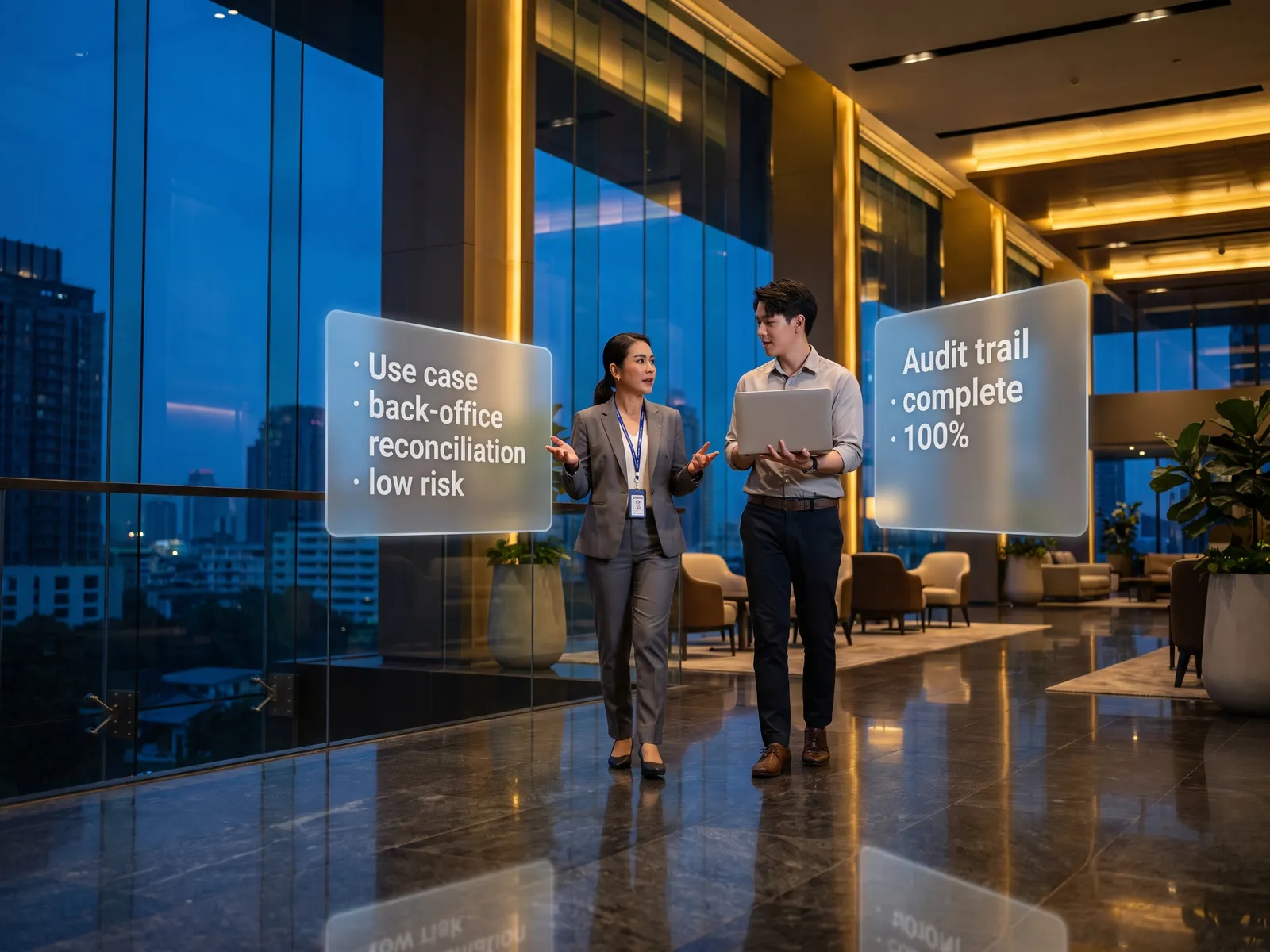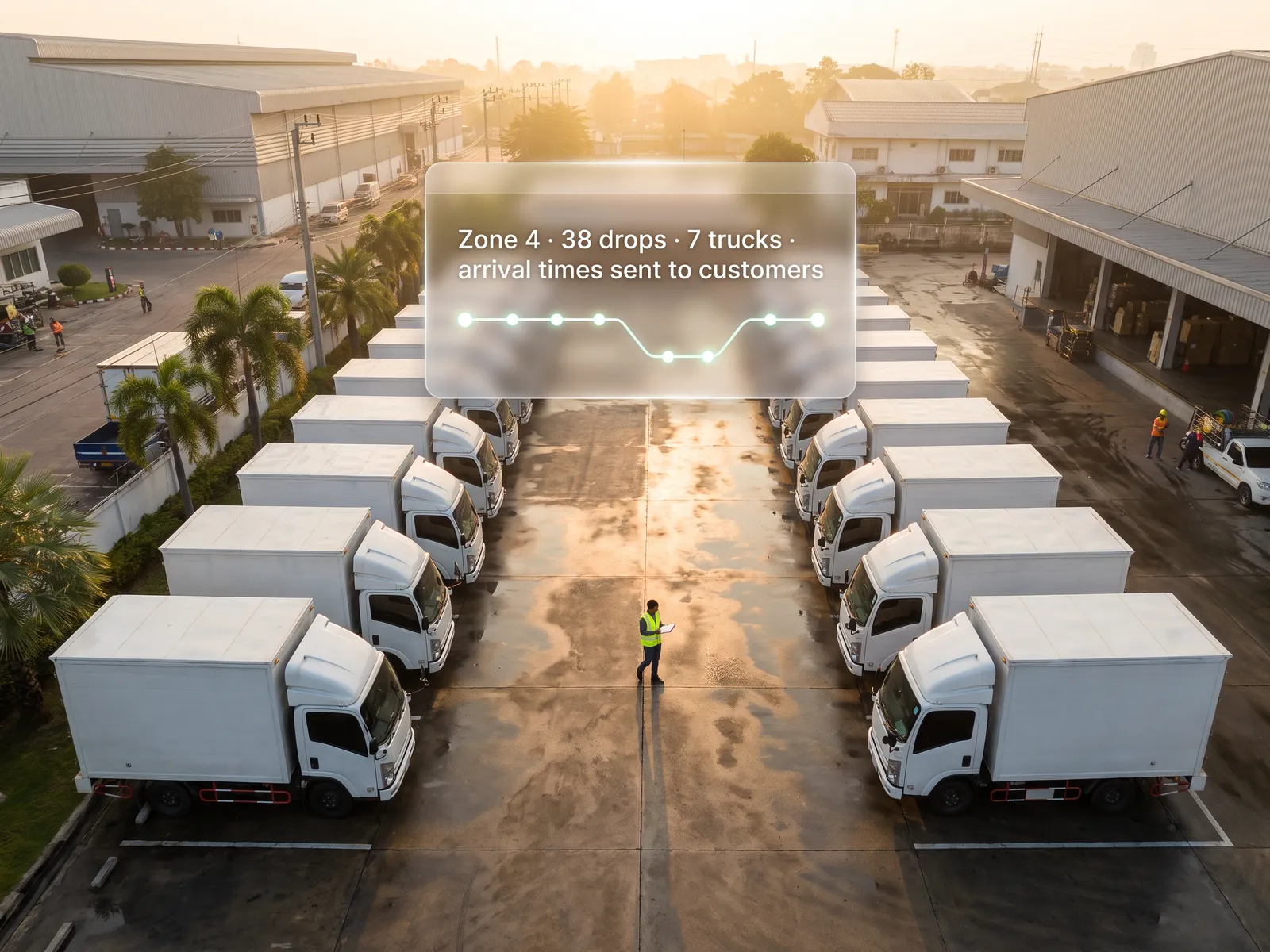
See the return on the money as scrap reduced or machine hours gained, on one line first, then decide to scale on your own plant’s numbers.
Back to AI Transformation
Factories & manufacturers · 08 / 13
AI roadmap for a factory
From Industry 4.0 on a slide to a first system on one line, measured in scrap reduced or machine hours gained.
 Factories & manufacturers
 “Management wants an Industry 4.0 plant, but the floor still logs output on paper, and the sensors we bought produce data nobody uses.”
The problem
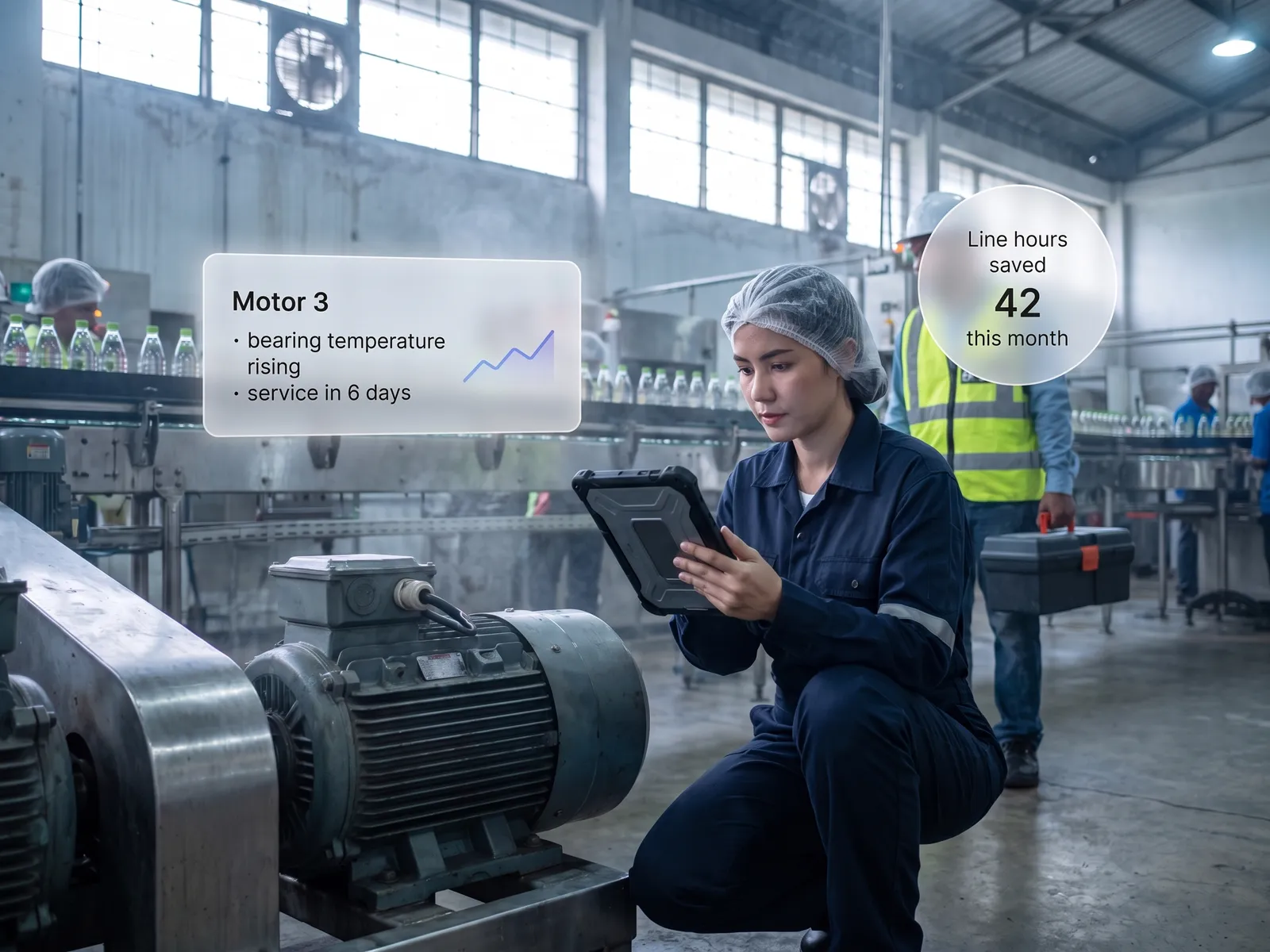
Management comes back from a seminar talking about Industry 4.0. On the floor, output and scrap are still written on paper every shift and typed into Excel in the evening. The sensors bought last year push readings into SCADA every second, and nobody has ever laid those readings next to the quality data. The data is all there, in different places and different shapes.
When a vendor pitches AI inspection or failure prediction, nobody in the plant can say whether the data is enough or which line to start on. So the project is too big from day one, or never starts.
How we solve it
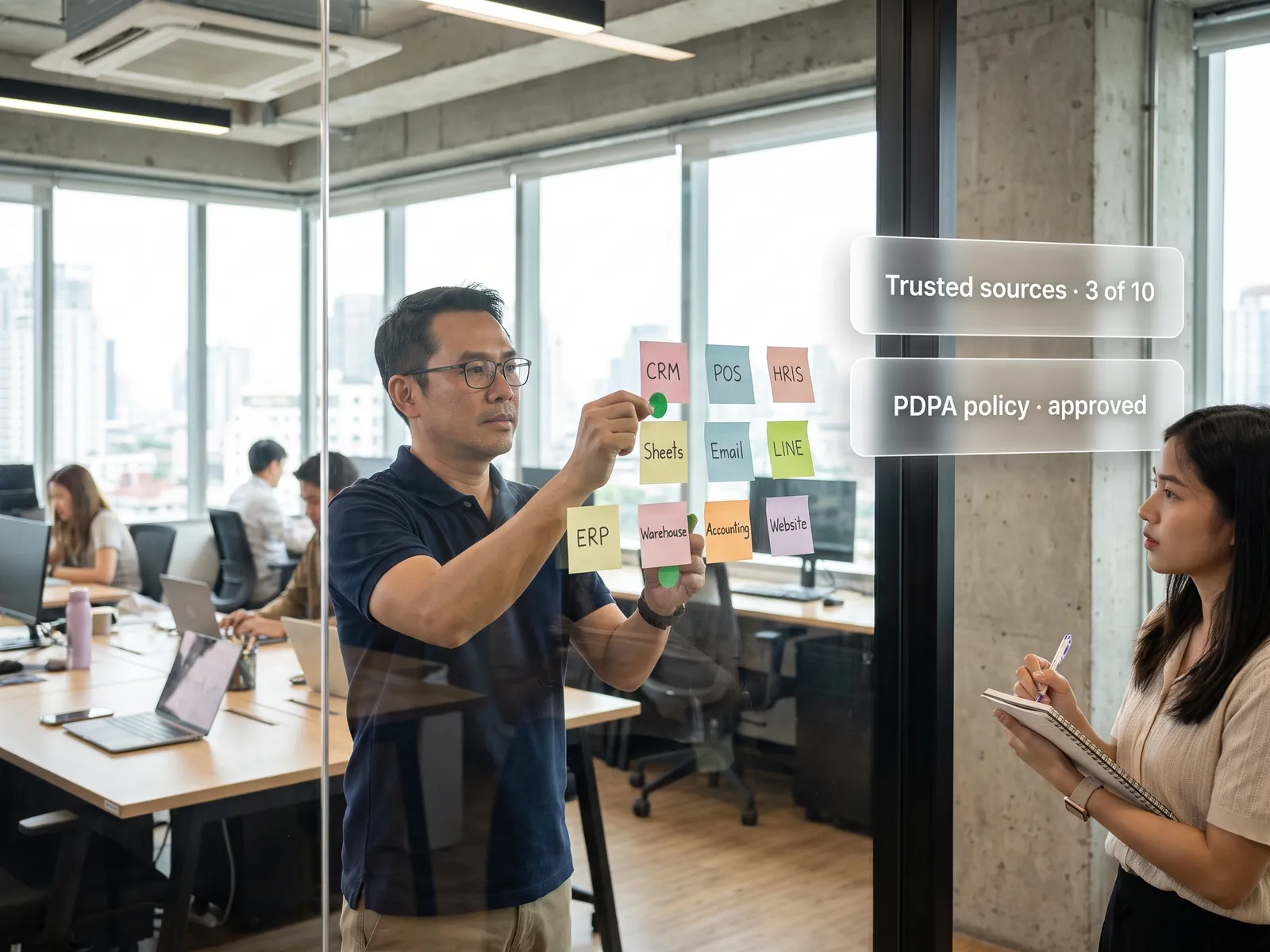
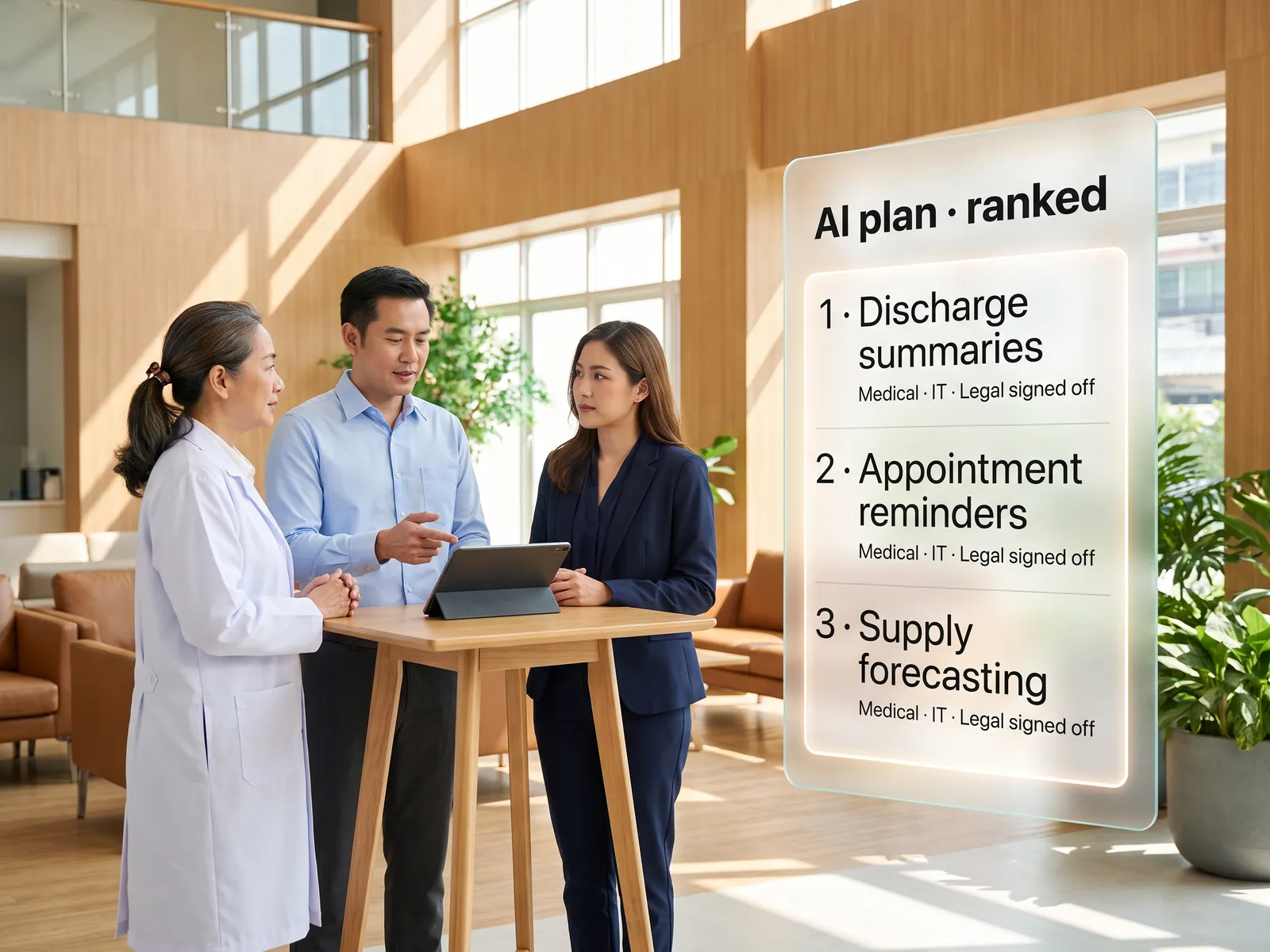
We start by walking the plant with the plant manager, the shift leads and the engineering team: which line has the most scrap, which machine stops most often and where each piece of data lives. Then we say plainly what the data you have can already do and what needs collecting first, and rank the use cases by a payback worked out from your own plant’s costs.
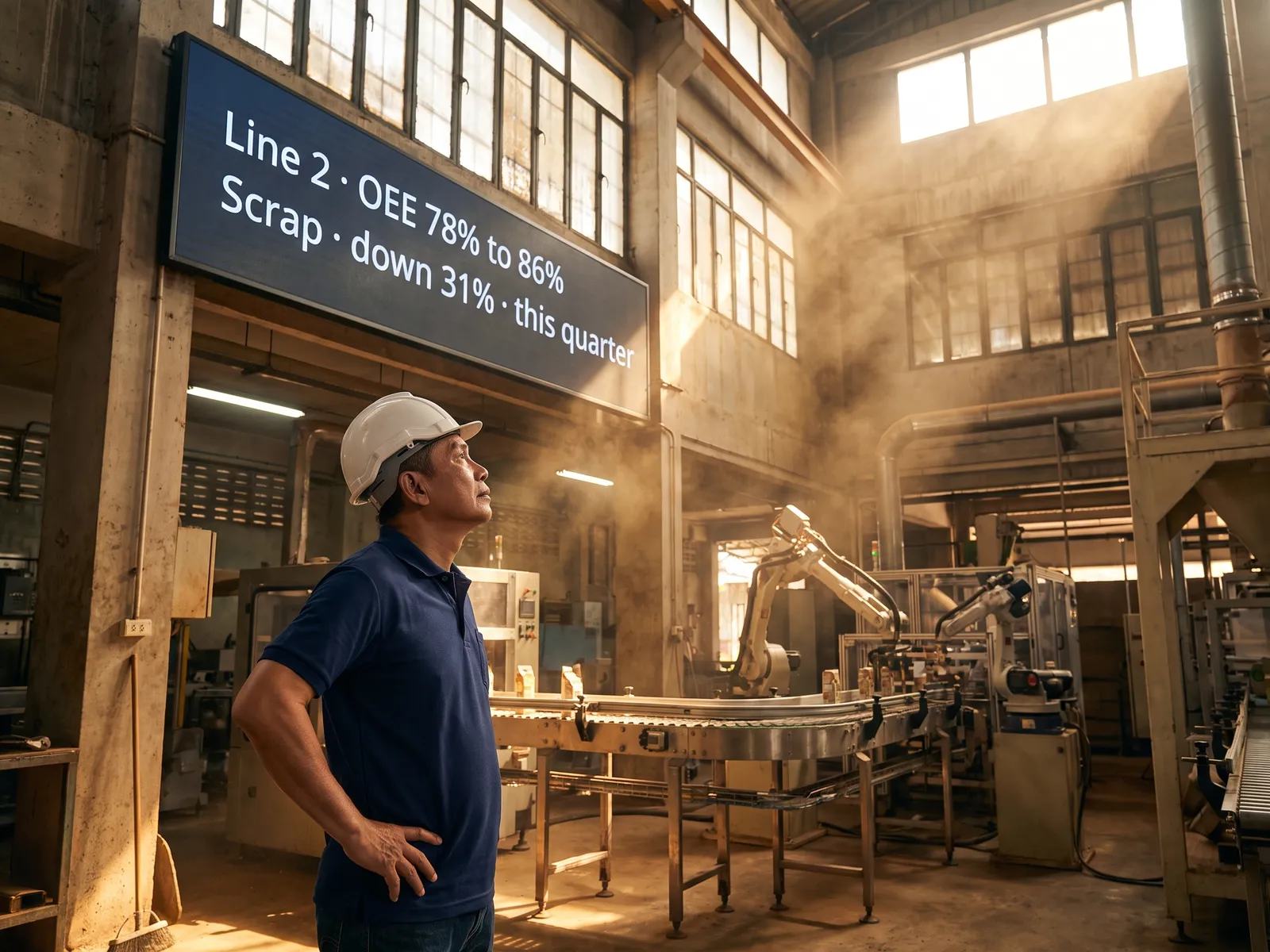
The pilot we build together sits on one line: a camera catching defects at one station, say, or an early warning for one machine. We set the metric before starting, measure along the way and report a number management can decide to scale on, with the floor team using the system itself from the first week.
Stopping the line, releasing or holding a lot and changing the production plan stay people’s decisions. The system inspects, warns and records. Anything the camera is unsure about goes to a person to judge.
How it runs
Work comes in from
- Sensor values from SCADA
- Output and scrap from paper or MES
- Repair history and plan from the ERP
- Walking the plant with shift leads and engineers
What the AI does
- Assess how usable the data is
- Rank use cases by payback
- Deliver the 90-day roadmap
- Build the pilot on one line together
Where it lands
- A pilot the floor runs itself
- Dashboard of scrap and machine hours
- The numbers to decide on scaling
- Next phase, with a budget
Before and after
Before
After
Output and scrap on paper, typed into Excel in the evening
The floor logs from a tablet and the numbers reach the dashboard at once
Sensors push readings every second that nobody uses
Sensor readings sit next to quality data, with an alert when they drift
The factory-wide AI project is too big to ever start
A first system on one line with a measured result, and the next line chosen
What you get
- 01
An assessment of how usable your machine, quality and production data really is, which parts still live on paper and where more needs collecting
- 02
A list of use cases ranked by payback, such as camera inspection, failure prediction, production planning and output logged from the floor instead of on paper
- 03
A 90-day roadmap that picks one line to start on, with the budget, team and metric for each phase, presented to the board
- 04
A pilot built together on one line, measured in scrap reduced or machine hours gained against the months before
- 05
A rule on who decides to stop the line or release a lot, and a workshop so shift leads and the engineering team run the system themselves
Who gets what
Read-only access to SCADA and MES, no touch on the control loop, deployable inside the plant network, and connected to the ERP through the channel its vendor supports.
Shift leads stop writing on paper and typing it again, and maintenance knows ahead of time which machine needs a look this week.
Who this fits
Food and beverageAutomotive partsElectronicsPackaging and plasticsBuilding materialsTextiles and garments
Connects with what you already run
ERPMESSCADACMMSPower BIGoogle Sheets
Development process
- 1
Discover
Requirements, users and success metrics, with scope and price fixed before we start.
- 2
Design
UX and system architecture; the prototype is approved before anything is built.
- 3
Build
AI-accelerated sprints with a demo every week, reviewed by senior engineers.
- 4
Test
QA, security and performance verified against the agreed scope.
- 5
Launch & care
Production deploy, team training, and a monthly care plan.

Turn your business problem into a system that works for you
Tell us today — get an executive-ready proposal with the plan and budget.
Talk to an engineer about thisMore solutions in AI Transformation
See the whole service Executives & finance AI roadmap for executives and finance Sales teams AI roadmap for sales Operations & production AI roadmap for production and operations HR teams AI roadmap for HR Marketing teams AI roadmap for marketing IT & data AI roadmap for IT and data Organisations rolling out AI Forward Deployed Engineers (FDE) for AI adoption Hospitals & clinic groups AI roadmap for healthcare providers Banking, insurance & securities AI roadmap for financial institutions Multi-branch retail AI roadmap for retail Logistics companies AI roadmap for transport and warehousing Family businesses & SMEs AI roadmap on a limited budget