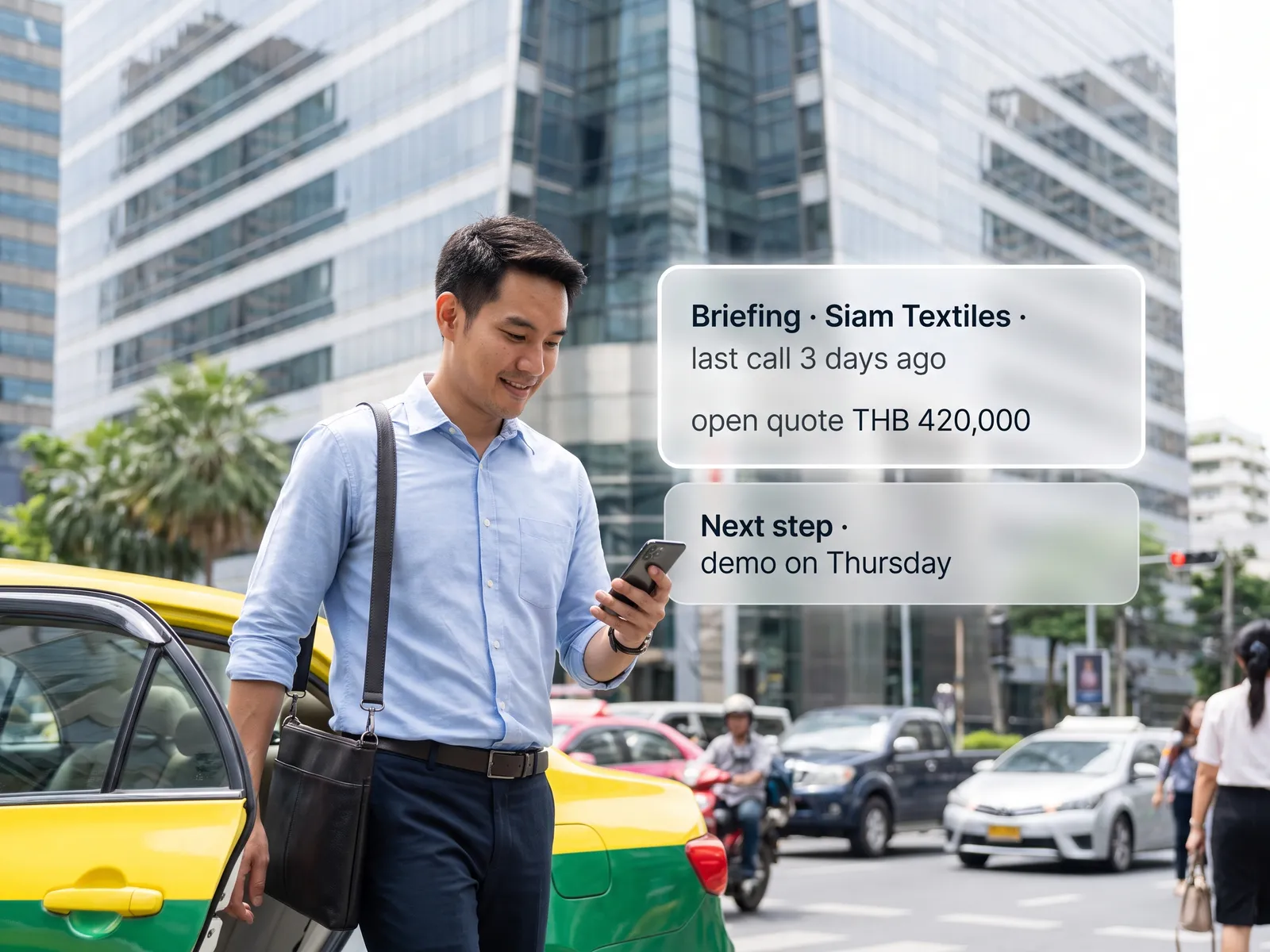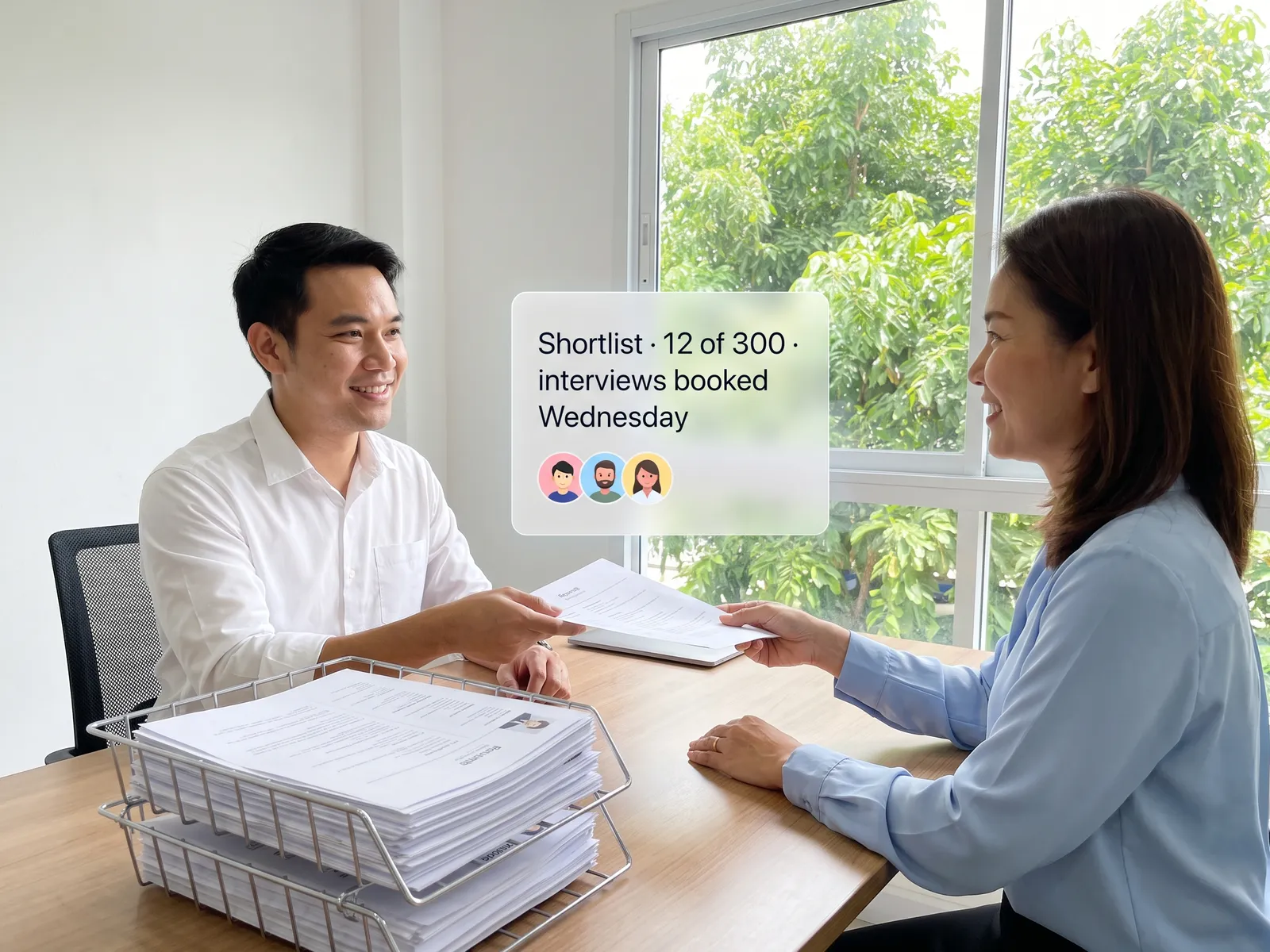
Every month you see what the licences and the team are buying: who uses AI, for which work, and what was tried and dropped. You can stop as soon as your own people can run it.
Back to AI Transformation
Organisations rolling out AI · 07 / 13
Forward Deployed Engineers (FDE) for AI adoption
Senior engineers who work alongside your teams, find the daily work AI really helps with, ship the first use cases on your own systems and data, and train your people to run them.
 Organisations rolling out AI
 “We bought ChatGPT and Copilot licences for everyone and ran a training day. Three months later almost nobody uses them, the pilot never left IT, and the consultants’ roadmap is sitting in a drawer.”
The problem
Many organisations start the same way. They buy ChatGPT Enterprise or Microsoft 365 Copilot seats for staff, bring the vendor in for a training day and leave everyone to try it. People draft a few emails with it and drift back to the old way of working. The AI cannot see the ERP or the company’s documents, nobody has said whether customer data may go into it under PDPA, and the work each team does every day was never part of the training. IT builds one pilot that works well in the demo, but nobody in the business takes ownership and IT already has a full day job, so the pilot never gets connected to the real systems.
The consultants’ roadmap ranks the use cases clearly. Carrying it out needs people who write code, connect systems and sit with a team until it actually uses the result, and nobody in the company has that time. When the licences come up for renewal, finance asks what the money bought, and nobody can answer with numbers.
How we solve it
A forward deployed engineer (FDE) works inside the client’s organisation, next to the people who do the work every day. Palantir made the model well known in enterprise software, and AI companies such as OpenAI and Anthropic now run FDE teams that work with their enterprise customers. Ours sit at your Bangkok office, work in your team’s chat and tools, or mix the two. We start by following each team’s work, seeing who repeats what and where the data lives, and agreeing a baseline together, such as the time it takes to draft one quotation or how many repeat questions customer service answers in a day.
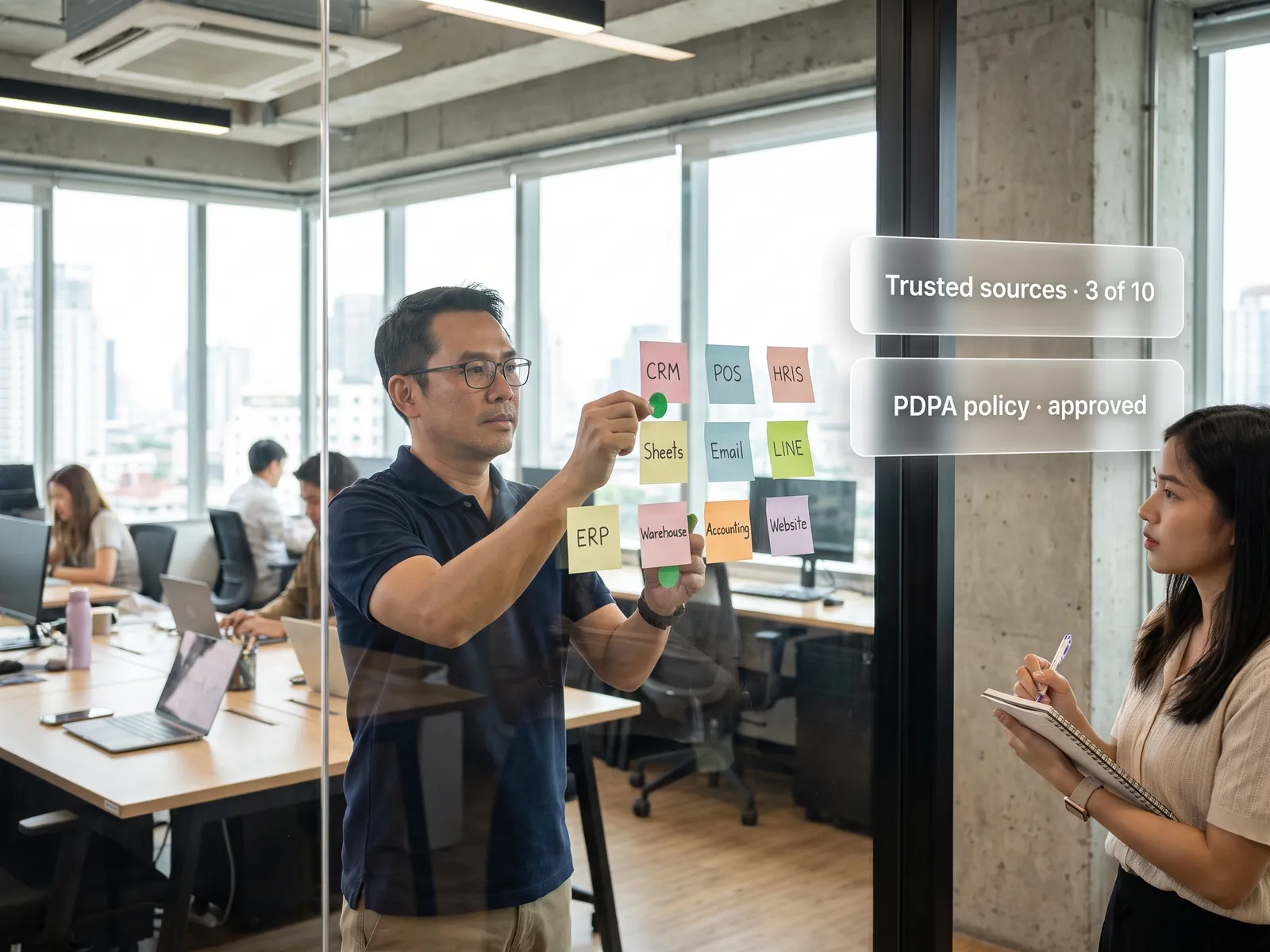
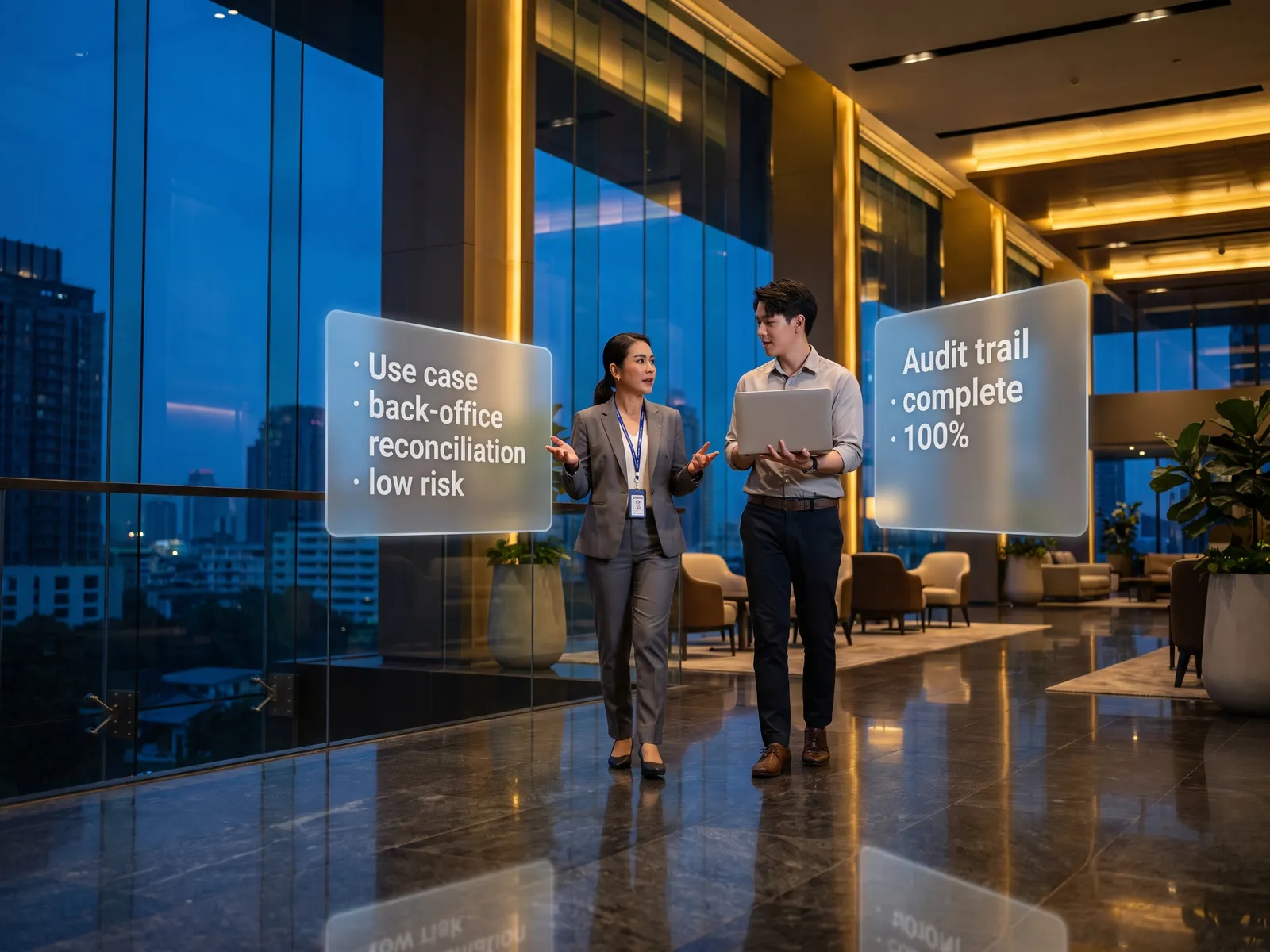
Then we build the first use cases on the systems you already run: an agent in LINE OA that answers stock questions from the ERP, an assistant that searches contracts and company rules in SharePoint or Google Drive, or a Copilot agent that drafts purchase-approval memos. Alongside them goes the groundwork that keeps AI safe: role-based access, audit logs, PDPA rules on which data may go into which tool, evaluation sets built from the team’s real questions and run before every change, and a cost dashboard per team. On the licences you already pay for, we set up prompts and agents fitted to each team’s work, and train a champion in each team to build and fix things themselves.
The work runs in blocks, monthly for example. At the end of each block we report plainly who is using what, for which job, how the results compare with the baseline, and what did not work and was dropped. It sits between hiring consultants for a roadmap and commissioning a fixed-scope project. You can stop once your own team can run it, and you keep all the code, runbooks and evaluation sets. The FDE proposes and your owners approve what goes live. Anything that touches money, customer data or a legal decision needs a person to approve it every time.
How it runs
Work comes in from
- Each team’s daily work
- AI licences you already pay for
- ERP, LINE OA and document stores
- A roadmap or AI requests on hold
What the AI does
- Sit with the teams, agree a baseline
- Ship first use cases on real systems
- Set up access, logs, PDPA and evals
- Train champions and hand over
Where it lands
- Use cases teams run every day
- Usage and results against the baseline
- A champion in every team
- Your code, runbooks and evaluation sets
Before and after
Before
After
Licences for everyone, and three months later almost nobody uses them
Each team has prompts and agents for its own work, with usage reported per team
The pilot is stuck in IT and has never touched a real system
The first use cases run on the real ERP and documents, measured against the baseline
The consultants’ roadmap sits in a drawer, with nobody free to build it
In-house champions run and change it, with the code and runbooks handed over
What you get
- 01
Forward deployed engineers who sit with your teams, at your Bangkok office and in the chat and tools they use, and list the daily jobs AI can really help with, with the time each takes today
- 02
The first use cases live on your own systems and data, such as LINE OA, the ERP, the document store or Microsoft 365, measured against a baseline the team agreed before we started
- 03
The groundwork that makes AI safe to run: role-based access, audit logs, PDPA handling, evaluation sets that score the answers, guardrails and a cost dashboard
- 04
Prompts and agents fitted to each team’s work on the licences you already pay for, such as ChatGPT Enterprise, Microsoft 365 Copilot or Gemini in Google Workspace, with usage reported per team
- 05
A champion in each team, trained by us until they can build and fix things, plus the code, runbooks and evaluation sets handed over so you can carry on without us
Who gets what
The engineers work under your access policies with accounts IT issues, connect through official APIs, start read-only and replace nothing. Every call is logged, and all the code lives in your company’s repository.
Teams get someone beside them while they try AI on real work, an answer the moment they get stuck, and prompts and agents that finish their own repetitive jobs, like drafting a customer reply or summarising a long document.
Who this fits
Companies that have bought AI licences for staffOrganisations with hundreds of staffGroups with many departments and systemsHospitals, banks and insurersManufacturers and multi-branch retailersOrganisations with an AI roadmap and nobody to build it
Connects with what you already run
Microsoft 365 CopilotChatGPT EnterpriseGoogle Workspace and GeminiLINE OASAP and other ERPsSharePoint and Google DriveInternal databases
Development process
- 1
Discover
Requirements, users and success metrics, with scope and price fixed before we start.
- 2
Design
UX and system architecture; the prototype is approved before anything is built.
- 3
Build
AI-accelerated sprints with a demo every week, reviewed by senior engineers.
- 4
Test
QA, security and performance verified against the agreed scope.
- 5
Launch & care
Production deploy, team training, and a monthly care plan.

Turn your business problem into a system that works for you
Tell us today — get an executive-ready proposal with the plan and budget.
Talk to an engineer about thisMore solutions in AI Transformation
See the whole service Executives & finance AI roadmap for executives and finance Sales teams AI roadmap for sales Operations & production AI roadmap for production and operations HR teams AI roadmap for HR Marketing teams AI roadmap for marketing IT & data AI roadmap for IT and data Factories & manufacturers AI roadmap for a factory Hospitals & clinic groups AI roadmap for healthcare providers Banking, insurance & securities AI roadmap for financial institutions Multi-branch retail AI roadmap for retail Logistics companies AI roadmap for transport and warehousing Family businesses & SMEs AI roadmap on a limited budget