No double payments, no paying above the agreed price, and a clear view of which supplier stops your production line most often.
Back to AI Workflow
Factories & manufacturers · 09 / 14
Purchasing and goods-receipt workflow
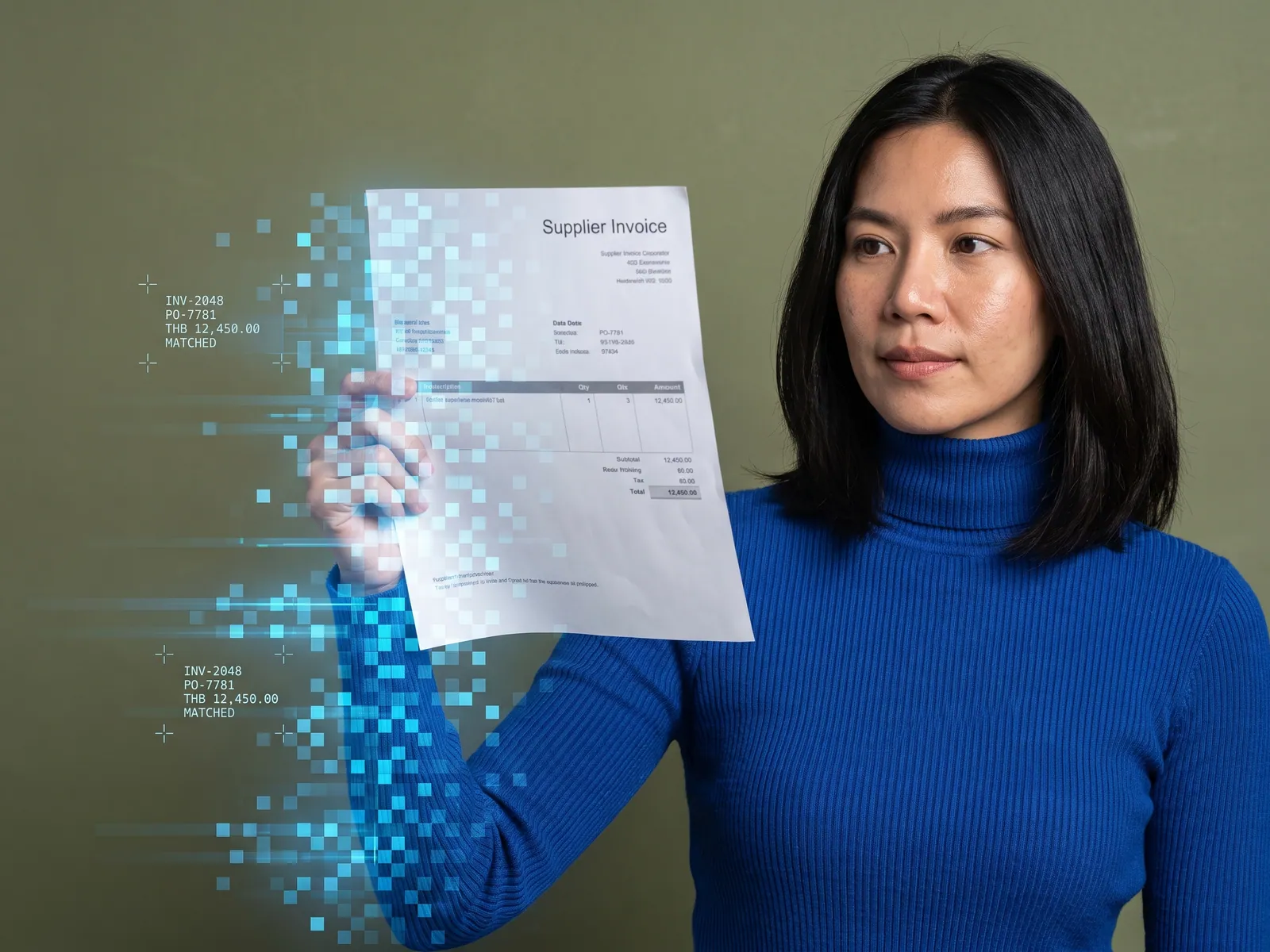
PO, delivery note and invoice matched on their own from the moment goods reach the dock, so a shortage or a wrong price is known that day, before the payment run.
 Factories & manufacturers
 “POs, delivery notes and invoices arrive from suppliers in every format. Warehouse and accounting match them by hand, and shortages or double payments surface afterwards.”
The problem
Goods arrive every day and every supplier sends paperwork its own way. Large ones print a delivery note from their system, small ones write it by hand, some email the invoice days later. The warehouse counts the goods and signs, passes the paper to purchasing to check against the PO, then accounting checks it again against the invoice before setting up the payable. Three documents for one delivery pass through three people on three different days.
The problems show up at the far end. A short delivery is discovered when the production line stops waiting for it. A price the supplier raised without saying is discovered when accounting is about to pay. An invoice sent twice is sometimes paid twice. Purchasing would like to know which suppliers get it wrong most often, and nobody has time to count backwards.
How we solve it
We ask the warehouse to do the one thing it already does: photograph the delivery note when the goods arrive and send it to the receiving LINE group. The agent reads the photo, turns it into line items and finds the matching PO in the ERP, comparing item, quantity and unit price line by line. When the invoice follows by email, the agent reads it and attaches it to the same delivery.
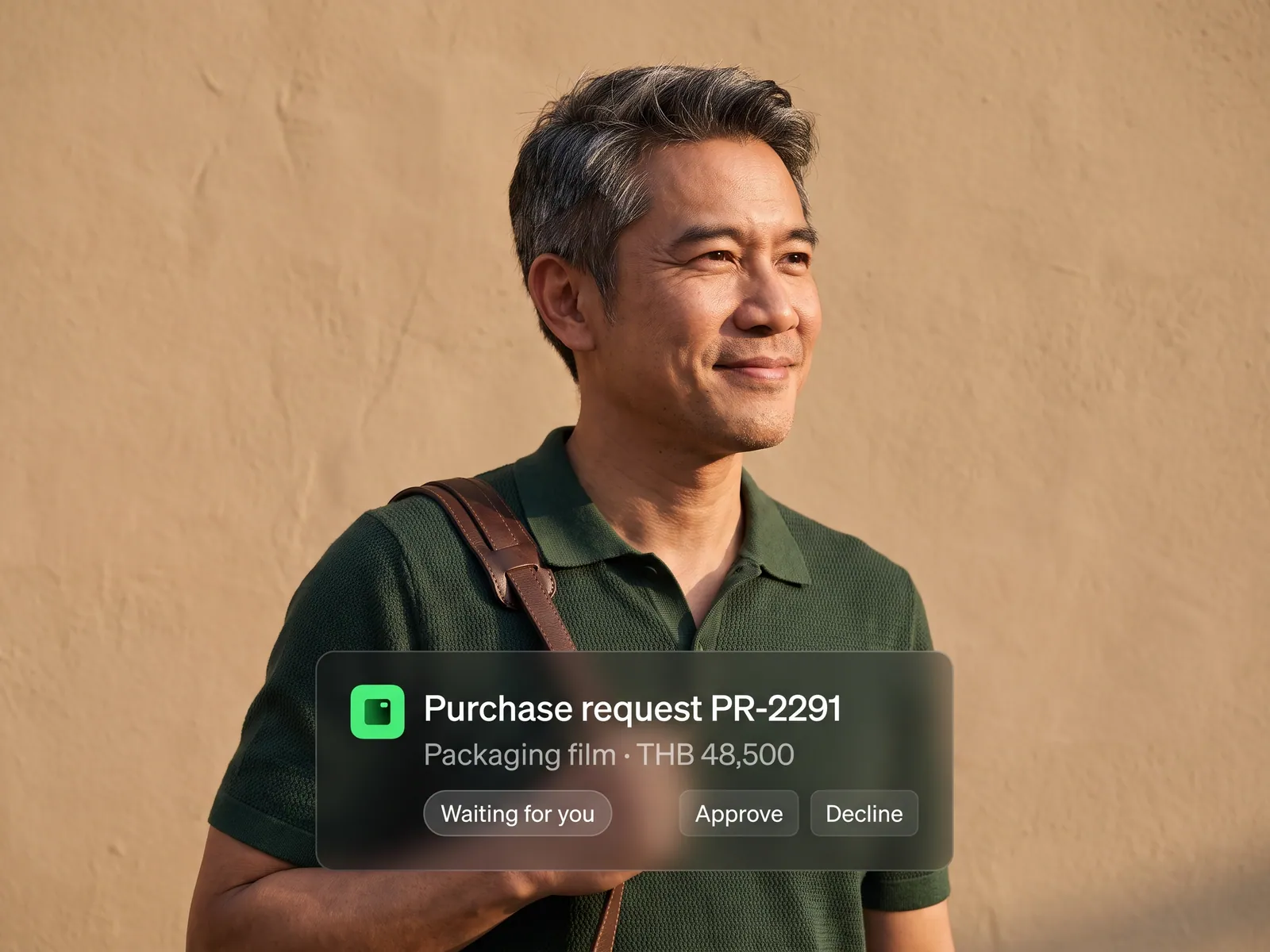
Where all three documents agree, the agent posts the goods receipt to stock in the ERP and passes the lines to accounting to set up the payable. Where they do not, say ten units short or a unit price above the PO, the agent alerts purchasing and the warehouse in LINE at once with the document photo and the figures that differ. A person decides whether to accept part of it, reject it or call the supplier, and confirms in the chat.
Receipts with a discrepancy and the payable itself still pass through a person every time. The agent posts on its own only when every field agrees, and every posting carries the original document photo and a log in the ERP for later review. At month end the agent tells purchasing which suppliers delivered late, short or at the wrong price, and how often.
How it runs
Work comes in from
- Delivery note photo from the dock
- Invoice by email
- The PO in the ERP
- The count the warehouse took
What the AI does
- Read documents in any format
- Three-way match, line by line
- Post the receipt when it agrees
- Alert at once when it does not
Where it lands
- Stock and payables in the ERP
- LINE alert to purchasing and warehouse
- Confirmation queue for differing lines
- Monthly supplier report
Before and after
Before
After
Three documents through three people on three different days
One photo of the delivery note and the system matches all three
A shortage found when the production line stops
Shortage or wrong price flagged in LINE the day the goods arrive
An invoice sent twice is sometimes paid twice
A duplicate invoice is caught before it reaches accounting
What you get
- 01
An agent reads the delivery note the warehouse photographs at the dock and the invoice that arrives by email, and turns them into line items, quantities and unit prices
- 02
A three-way match against the PO in the ERP, line by line, with the goods receipt posted to stock when quantity and price agree
- 03
An instant LINE alert to purchasing and the warehouse when a delivery is short, over, priced differently from the PO, or invoiced twice
- 04
Matched lines passed to accounting to set up the payable, with a person confirming only the lines that differ
- 05
A monthly report to purchasing on suppliers who deliver late or wrong, with the numbers to use in the next negotiation
Who gets what
Posts to the ERP through its API or whichever channel your administrator specifies, read-only to begin with if you prefer. It can run inside the factory network if data cannot leave, and every entry carries its source document.
The warehouse just takes a photo, purchasing stops comparing paper, and accounting gets checked lines to set up without hunting for the PO.
Who this fits
Food & beverage plantsParts & assembly plantsPackaging & plasticsBuilding materialsManufacturers with dozens of suppliers
Connects with what you already run
SAPOdooExisting ERPEmailLINEGoogle Sheets
Development process
- 1
Discover
Requirements, users and success metrics, with scope and price fixed before we start.
- 2
Design
UX and system architecture; the prototype is approved before anything is built.
- 3
Build
AI-accelerated sprints with a demo every week, reviewed by senior engineers.
- 4
Test
QA, security and performance verified against the agreed scope.
- 5
Launch & care
Production deploy, team training, and a monthly care plan.

Turn your business problem into a system that works for you
Tell us today — get an executive-ready proposal with the plan and budget.
Talk to an engineer about thisMore solutions in AI Workflow
See the whole service Marketing teams Marketing workflow Sales teams Sales and CRM workflow Accounting & finance teams Accounting and finance workflow HR teams Employee onboarding workflow Purchasing teams Purchase request and approval workflow Customer service teams Customer service workflow Accounting teams issuing many invoices e-Tax Invoice and e-Receipt workflow Brands selling on marketplaces Marketplace back-office workflow Accounting & law firms Client document workflow Hospitals & clinics Insurance claim and records workflow Logistics & transport Job sheet and billing workflow Real estate & juristic offices Repair request and common-fee workflow Wholesalers & distributors Orders-from-chat workflow