Businesses that take and make calls every day · 14 / 14
AI that answers calls and calls customers in Thai, for businesses
An AI answers your company number in Thai, day and night, books appointments and passes calls to staff with a summary. It also calls customers to remind, confirm orders and follow up.
“Calls drop while staff are busy with a customer, and after six nobody picks up at all. Then the team spends the day calling to remind people of appointments and confirm orders, a hundred calls a day, and nothing else gets done.”
The problem
Many customers still pick up the phone when something is urgent, when they want it settled in one call, or when typing is awkward. Calls arrive together at the busy hour, and the person who answers the phone is the same person serving customers at the counter, so the second and third calls ring out. After hours the call goes to voicemail that almost nobody checks, and the customer who wanted to book or ask about a service calls the next business instead.
Outgoing calls are just as heavy. Clinics call to remind patients about tomorrow, online shops call to confirm cash-on-delivery orders, accounts chase overdue invoices and sales call leads who went quiet. Each job is the same script dozens or hundreds of times a day, the results sit on paper or in separate Excel files, and when someone is on leave or resigns, those calls stop.
How we solve it
We connect the AI voice agent to your business’s phone numbers. You can forward your existing number, connect through the IP-PBX or SIP Trunk you already use, or open a new number. When a customer calls, the AI listens to what they say in Thai, looks up the answer in your information, such as services, opening hours and conditions, and replies in a Thai voice within a few seconds. If they want to book or move an appointment, it checks free slots in your calendar or booking system and books them in the same call.
For outgoing calls, the AI works through the list your system sends, such as customers with an appointment tomorrow or orders waiting to ship, within the hours you set. If nobody answers, it calls again on the schedule you choose or sends a LINE or SMS message instead. The result of each call, confirmed, moved or cancelled, goes back into your system by itself. It only calls customers who already deal with your business and have agreed to be contacted.
Every call opens with the AI saying it is the company’s AI assistant and why the call is recorded, as the PDPA asks you to tell customers. When the customer asks for a person, a decision is needed or the AI fails to hear twice, it passes the call to staff with a short summary. Every call has a recording and a transcript in the dashboard, and each month we use those real calls to improve the answers and the pronunciation of your business’s own words.
How it runs
Work comes in from
Customers call your company number
Call lists from bookings or orders
Your services and conditions
Calendar and free appointment slots
↓
What the AI does
Listens to the caller in Thai
Looks up the answer in your information
Books, confirms or records during the call
Hands over to staff with a summary
↓
Where it lands
The customer is sorted in one call
Bookings and orders updated in your system
Staff take only the calls that need them
Dashboard with recordings and results
Sample incoming call
A customer calls the clinic at eight in the evening, after the staff have gone home
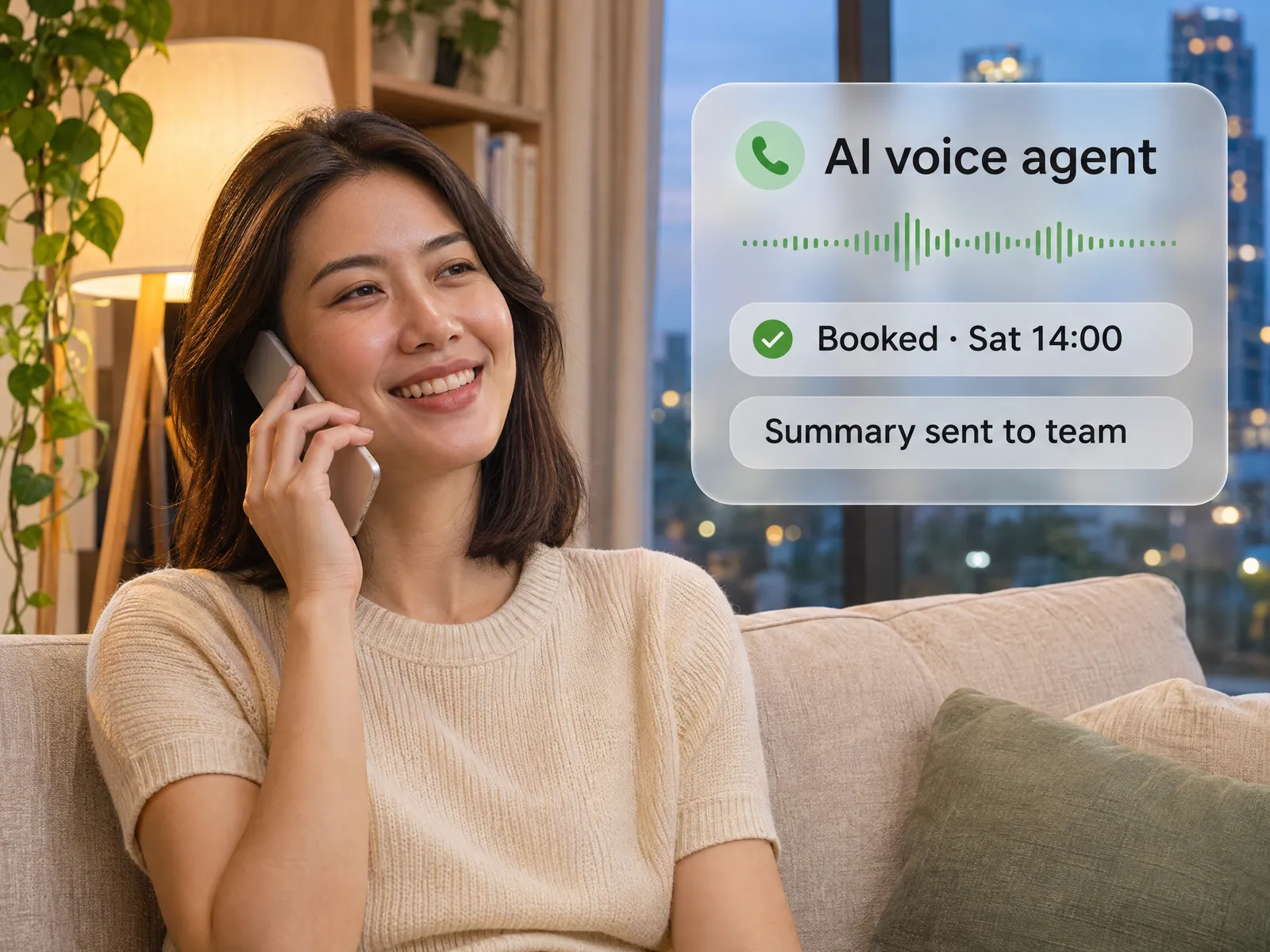
The AI answers, says why the call is recorded, books from real free slots and passes the question about symptoms to a dentist to call back, because treatment questions are for people.
AI
Hello, Yimdee Dental Clinic. I’m the clinic’s AI assistant, and this call is recorded to manage appointments. How can I help?
Customer
I’d like to book a scale and clean. Anything free this Saturday?
AI
This Saturday there’s 10:30 in the morning or 2 in the afternoon. Which suits you?
Customer
Two o’clock. The name’s Somchai, and use this number.
AI
You’re booked, Khun Somchai: scale and clean, Saturday at 2 p.m. The clinic will text you the details and call to remind you on Friday.
Customer
If my teeth are really sensitive afterwards, what should I do?
AI
For symptoms, I’ll ask a dentist to answer. The clinic is closed now. Can the team call you back tomorrow morning?
Customer
Yes, that’s fine.
Saved to the system
New booking: scale and clean, Saturday 14:00 · Call-back about sensitive teeth, sent to the team for 9:00 tomorrow · Recording and transcript in the dashboard
Sample data: the clinic, the customer and the times in this conversation are made up to show how it works. The real call is in Thai.
Before and after
Before
After
×At the busy hour the second and third calls ring out, and after hours they go to voicemail.
✓The AI takes several calls at once, day and night.
×Staff spend the day calling to remind people and confirm orders, hundreds of calls a day.
✓The AI works through the call lists, and staff take only the customers who ask for a person.
×Call results sit on paper or in Excel, and nobody knows who has confirmed.
✓Every call’s result goes into the system by itself, with its recording and transcript.
What you get
01
An AI that answers your existing company number or a new one, listens and speaks Thai, answers from your own information and takes several calls at once, day and night.
02
An AI that calls out from lists and time windows you set: appointment reminders, cash-on-delivery order checks, payment reminders and lead follow-up, only to customers who agreed to be contacted.
03
Booking and moving appointments, checking order status and writing each call’s result to your calendar, CRM or existing system while the call is still going.
04
Handing the call to staff when the customer asks for a person, a decision is needed or the AI cannot hear clearly, with a summary of who is calling and what they want.
05
A dashboard with every call, its recording, transcript and result, and the questions customers ask most. Each call opens by saying it is an AI assistant and that the call is recorded.
Outgoing calls
AI that calls customers for your team: appointment reminders, order confirmations, payment reminders and lead follow-up
These are the six outgoing calls teams repeat every day, and the AI can make all of them from your company’s real number. It only calls customers who already deal with your business and have agreed to be contacted. Every result goes back into your system, and calls that need a person go to staff.
01
AI appointment reminder and confirmation calls
Clinics, car service centres and salons have the AI call customers with an appointment the next day and ask if they are still coming. If they want to move it, the AI offers new slots and moves the booking during the call, and a cancelled slot opens for someone else at once. More ways to cut no-shows are in this article.
“Hello, this is Yimdee Dental Clinic, calling to confirm your scale and clean tomorrow at 2 p.m. Are you still able to come?”
AI calls to confirm cash-on-delivery orders before shipping
Online shops have the AI confirm the name, address and items before packing. Orders the customer says they never placed, or that go unanswered after several tries, are held for the team to check, so fewer COD parcels come back and less shipping is paid for nothing.
“Calling from the shop to confirm your order of two sunscreens, cash on delivery, to Lat Phrao Soi 15. Is that right?”
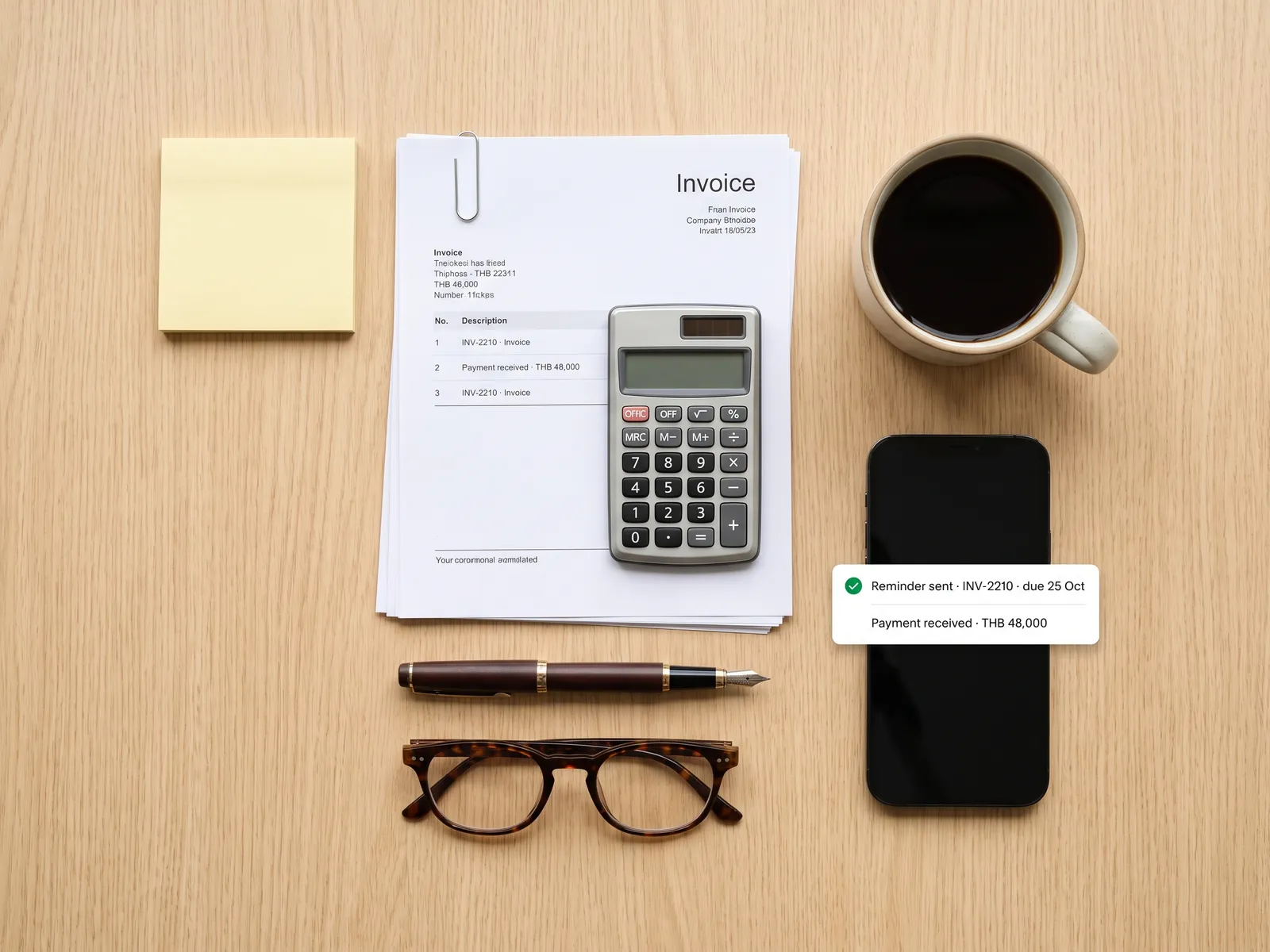
Accounts have the AI call before and after the due date, give the amount and how to pay, and note the date the customer says they will transfer. Many companies call this debt collection, though the first calls should be polite reminders. Customers who ask for more time or dispute the amount go to accounts to decide.
“Calling from the company to let you know the October invoice is due this Friday. Shall I send a payment QR code on LINE?”
For people who filled in a form, asked for a quotation or enquired about a project and then went quiet, the AI calls to ask if they are still interested, asks two or three questions and books a time for sales to call back. Sales then talk first to the leads who are ready.
“Calling from the Rim Suan housing project. You asked for details on a three-bedroom house last week. Are you still interested?”
Insurers call about policies close to expiry, and car service centres call when a service is due. The AI gives the expiry date or the mileage due, asks if the customer wants to renew or book now, and books a time or passes the case to an officer.
“Calling from the service centre to let you know your car is close to its 10,000 km service. Would next week suit you to bring it in?”
After a visit, a repair or a delivery, the AI asks for a score on two or three questions and listens to what the customer did not like. Answers add up to a report, and unhappy customers go to a manager to call back the same day.
“Could I have one minute? From one to five, how would you rate yesterday’s service?”
Sample data: the shop, the project and the lines in this section are made up to show how it works. Real calls are in Thai.
Who gets what
Business owner
No more customers lost because nobody answered. Reminder and confirmation calls keep going when staff are on leave, and one screen shows today’s calls, bookings made and orders confirmed.
IT director
It connects to your existing number by call forwarding, an IP-PBX or a SIP Trunk, so the number stays the same. It uses your systems through APIs with only the access it needs, recordings are kept for the period your company sets under the PDPA, and a Private LLM is an option when data cannot leave the company.
The team using it every day
Front-desk staff stop running to the phone while serving customers, and take the calls the AI passes over with a summary, without asking the customer to start again.
Who this fits
Clinics and private hospitalsCar service centres and dealersOnline shops that ship cash on deliveryHotels, restaurants and beauty salonsInsurance and instalment businessesCompanies with a call centre or phone team
Connects with what you already run
Your existing company numberIP-PBX phone systemSIP TrunkLINE OAGoogle CalendarHubSpotExisting booking or order system
Development process
1
Discover
Requirements, users and success metrics, with scope and price fixed before we start.
2
Design
UX and system architecture; the prototype is approved before anything is built.
3
Build
AI-accelerated sprints with a demo every week, reviewed by senior engineers.
4
Test
QA, security and performance verified against the agreed scope.
5
Launch & care
Production deploy, team training, and a monthly care plan.
Questions before you let an AI answer your calls
How well does the AI understand Thai and regional accents?
It understands central Thai spoken in normal sentences well, including polite particles, short forms and English words mixed in. Isan, northern and southern accents work for everyday topics, but proper names, drug names or product names can be missed. Before launch we add your business’s own words to the system and try it on conversations like the ones your customers really have. If the AI cannot hear clearly, it asks again first and passes the call to staff if it is still unclear.
What if the customer wants to talk to a person?
The customer can ask for staff at any time. The AI transfers the call to the number or staff group you set, with a summary of who is calling and what they want. If the call comes after hours, the AI takes the details and creates a call-back task for the next morning. You can set topics such as refunds, complaints or illness to always go to a person.
Do we have to tell customers the call is recorded?
You should, and the system we build says so at the start of every call: that it is the company’s AI assistant, why the call is recorded and that the customer can ask for staff, as the PDPA asks you to tell the people whose data you collect. Recordings and transcripts are kept for the period your company sets, opened only by people with access, and deleted when that period ends. Have your legal team check the wording before launch.
Can we keep our existing company number?
Yes. Most businesses forward their existing number to the AI, for every call or only when nobody answers. If you already use an IP-PBX or a SIP Trunk, we connect to it, and if you want a separate number for outgoing calls, we can open one. Customers keep calling the number they know.
How is this different from a press-a-number phone menu (IVR)?
An IVR plays a menu and the caller presses a number, so it can only handle what is on the menu. An AI voice agent lets the customer say what they need in a normal sentence, then answers or does it, such as booking an appointment or checking an order. If you already have an IVR, the AI can take over from some of its options.
Can the AI make sales calls to people who are not customers yet?
The system we build only calls customers who already deal with your business and agreed to be contacted, such as people with an appointment, an order, an overdue invoice or a call-back request. We advise against using AI to call strangers, because it puts you at risk under the PDPA and gets your company number flagged as spam.
If most of your customers message instead of calling, start with the LINE OA chatbot with AI and add voice later on the same knowledge base.
Tap to open the mic and talk to our engineerHere to design your solution, with budget and timeline
Agent voice
Male
Female
Cookies and the AI assistant
This site uses Google Analytics to count visits and see which pages are read. When you talk with Dream, our AI assistant, your messages are processed by an AI model and kept so we can prepare a proposal and follow up. If you accept, we also use OpenAI’s pixel to see whether our ads in ChatGPT lead to enquiries. It sets cookies only after you accept.